Snubnose pompano
Trachinotus blochii · Carangidae
- Saltwater
- Coastal
- Medium
- Size
40–110 cm
- Weight
0.9–3.4 kg
- Depth
1–7 m
Where to fish
- Estuary
- Reef
- Beach
Habitat icons: Flaticon
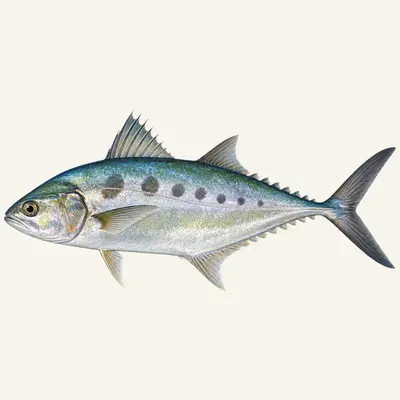
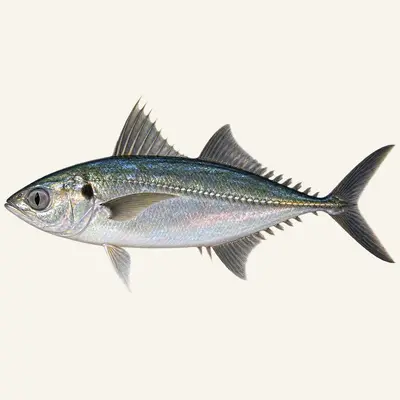
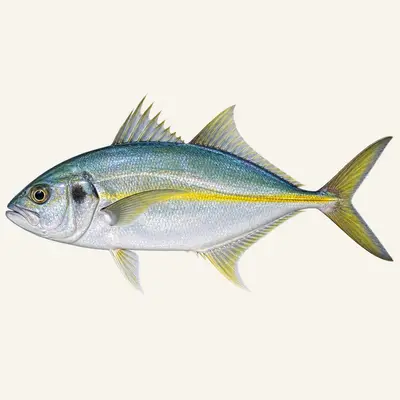
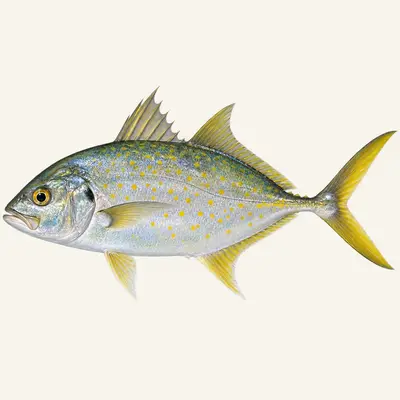
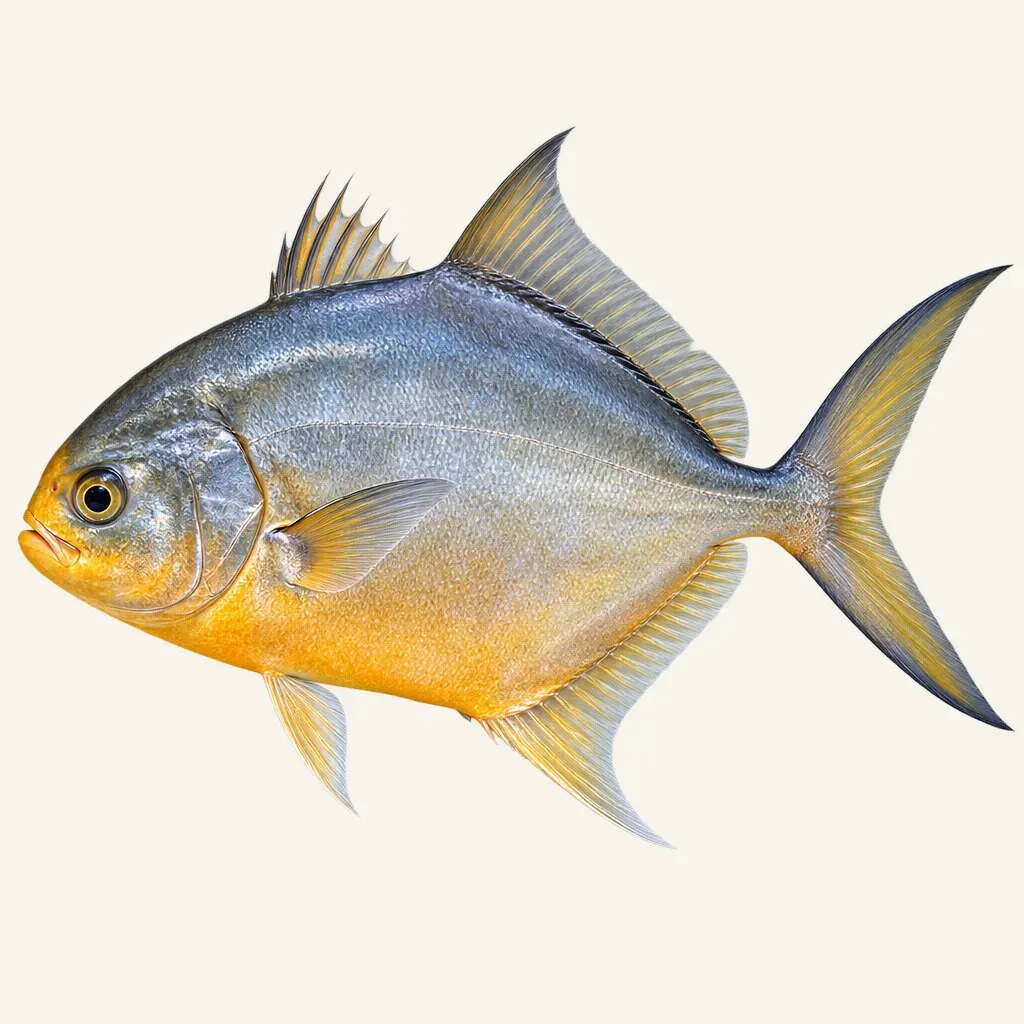
The snubnose pompano (Trachinotus blochii) is a carangid with a deep, laterally compressed body and nearly vertical frontal profile, wearing brilliant silver colouration sometimes marked with golden spots on the flanks. A fast and hard-fighting fish, it inhabits shallow reef edges and sandy beaches of the Indo-Pacific.
Calendar
Recorded in 32 countries
Australia · China · Cocos (Keeling) Islands · Egypt · Fiji · French Polynesia · French Southern Territories · Guam · Hong Kong SAR China · India · Indonesia · Japan · Kenya · Malaysia · Maldives · Marshall Islands · Mayotte · Micronesia · Mozambique · New Caledonia · Norfolk Island · Northern Mariana Islands · Palau · Papua New Guinea · Philippines · Réunion · Saudi Arabia · Seychelles · Singapore · Taiwan · Tanzania · Wallis & Futuna
GBIF occurrence records — native and introduced populations combined.
Its range
The range covers the Indo-Pacific tropical belt across its full width, from the Red Sea and East Africa to the Marshall Islands and Samoa, and from southern Japan to Australia.
That extent follows from the continuity of what the species requires: sand along the shore and an exposed reef a few hundred metres out. The warm belt of the Indo-Pacific lines those two elements up without a break over nearly half the circumference of the planet. The eastern limit falls where the island chains thin out and the open Pacific begins, offering no shore at useful intervals.
Identifying it
Shape will not name a pompano to species. The whole genus shares one outline — short, very deep, flattened on the sides to the point of showing almost nothing head-on — so identification here runs through the ray counts instead of the profile.
Seven spines in the first dorsal, 18 to 20 soft rays in the second. Three anal spines, 16 to 18 rays. Those totals are distinctly lower than the eastern Atlantic species carry, which run to the high twenties in the soft dorsal, and on a fish whose form says nothing, the count decides.
The water it needs
One to seven metres. The entire life of the species fits inside that layer, the thinnest of any pompano here, and nothing concerning it happens deeper.
Within the band, the address changes with age, and the change is total. Juveniles occupy sandy shorelines and shallow bays with sandy or muddy bottoms near river mouths; they tolerate the reduced salinity there and move in small schools. Adults leave that murky water for coral and rock reefs facing the open sea, in clear water, and live there mostly alone.
An angler who changes target size therefore changes habitat, water colour and salinity — but not method.
Areas
- Coastal surf zones
- Shallow reefs
- Tropical lagoons
- River mouths
Techniques
- Shore spinning
- Metal lure casting
- Shrimp drift fishing
- Surf fishing
Baits
- Natural shrimp
- Bright metal lure
- Beach crab
- Marine worms
What it eats
Adults feed principally on sand molluscs and on other hard-shelled invertebrates.
That single line describes a whole trade. Buried prey cannot be seen, so it has to be detected in the substrate. Shelled prey cannot be swallowed as found, so it has to be broken. Neither job rewards speed or eyesight, and that is why this carangid has nothing in common, in the way it makes a living, with the jacks that run fish down in open water above the same reefs.
How to catch it
Seven metres is the ceiling, so this is shore fishing or fishing from a very small boat, and all of it lies within casting range. No deep-water equipment has any use on the species.
Choice of ground follows from the age of the fish wanted. River mouths and muddy bays hold the young in groups; the exposed reefs offshore hold the big ones, singly. These are two distinct fisheries, and running them together amounts to looking for a large fish in a nursery.
Bait follows a diet of shelled invertebrates. Shellfish, crabs and shrimp match what the animal actually eats; a fast-worked lure refers to nothing in its repertoire.
One figure should be known before deciding the fate of a catch: the earliest recorded breeders measure 58 cm, while the length commonly caught is 40. The ordinary fish of this species has not yet spawned.
Cases of ciguatera have been reported in this pompano. The toxin is not destroyed by cooking and its occurrence is a matter of locality; local practice is the only guidance worth having.
Conservation
The gap between maturity and capture size is what weighs here, and it is considerable. Fifty-eight centimetres for the earliest known breeder against 40 for the ordinary catch means the fishery works on animals that have not contributed a single spawning, and the stock renews itself only through what escapes the effort.
The nursery adds a fragility of its own. The young depend on shallow muddy bays at river mouths, which is the first strip that ports, land reclamation and coastal aquaculture take across the whole of the tropics. A population can decline while the offshore reefs where the adults live stay intact.
The species is farmed commercially, and that production runs alongside a fishery removing immature fish. Nothing on a market stall distinguishes a farmed fish from an undersized wild one.
March 2015 is the date of the last global review of the species, and the immature harvest described above postdates much of the data behind it.
Regulations
Check the local regulations in force (legal size limits, closed seasons, bag limits).
For guidance only. Legal sizes, quotas and open seasons vary by location and season: always check the local regulations in force before fishing.
Other names
Snubnose pompano in English, and unusually for this genus every language in the catalogue names the same feature. Elsewhere among the pompanos the vernacular names trade places between species; here the short snout carried the vote.
Pompano on an Asian market, or in an aquaculture return, covers several members of Trachinotus without distinguishing them. A trade name is not an identification for this genus, and a farmed fish sold under one is not traceable to a species from the label alone.
The epithet blochii honours Marcus Elieser Bloch, the eighteenth-century Berlin physician whose descriptive ichthyology still underpins the group.
Sources: fishbase.se · api.gbif.org