Zebra seabream
Diplodus cervinus · Sparidae
- Saltwater
- Coastal
- Medium
- Size
35–55 cm
- Weight
0.5–2.7 kg
- Depth
30–300 m
Where to fish
- Rocky shore
Habitat icons: Flaticon
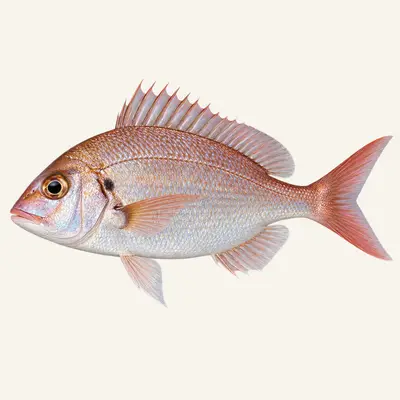
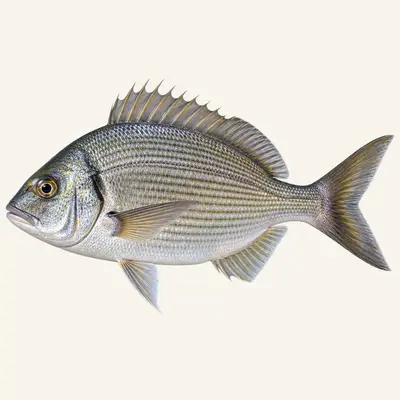
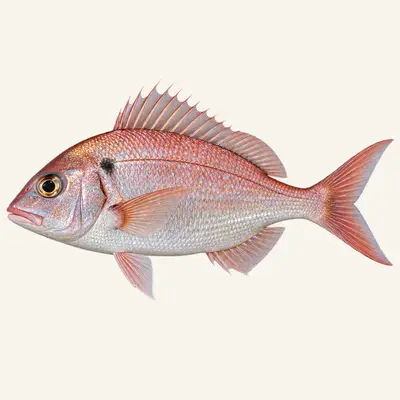
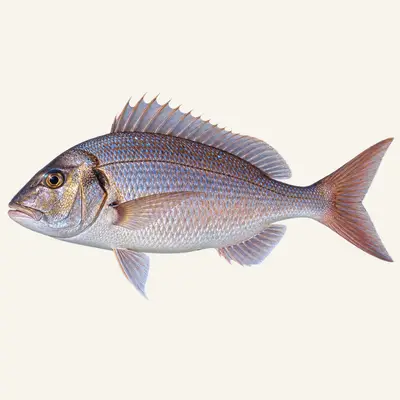
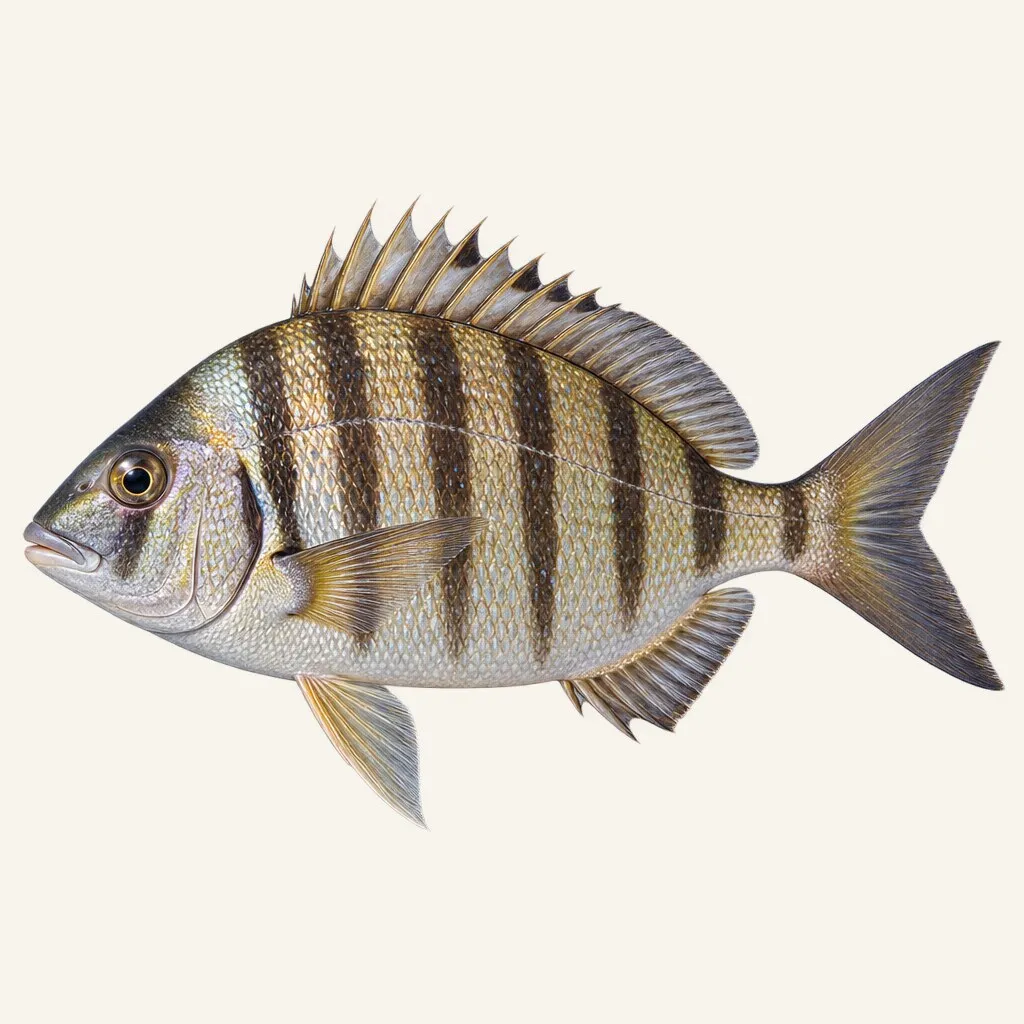
The zebra sea bream is the largest of the sea breams, easily recognized by its five to six wide dark-brown vertical bands alternating with silvery areas. A sparid of coastal rocky reefs, it can exceed 50 cm and frequents drop-offs and invertebrate-rich zones.
Calendar
Its range
From the Bay of Biscay to South Africa on the eastern Atlantic, through the Mediterranean to the Strait of Gibraltar, Madeira and the Canaries included.
Three absences complete the map, and they are specific: Cape Verde, the waters off Senegal, and the Gulf of Guinea. A gap of that shape in an otherwise continuous range is not accounted for by latitude, since the fish occurs both north and south of it. Something else on that stretch of coast excludes it, and the range as drawn does not say what.
The water it needs
This is the deep-water sea bream. It is benthopelagic on the shelf, over rock between 30 and 80 metres, and it goes down to 300 on mud.
That band separates it absolutely from its relatives, which live above 50 metres and come into the breaking waves. This one does neither, and the practical consequence is short: it is not caught from the shore. Every other fish in the group is.
It forms schools of four or five individuals of different sizes. That deserves noting, because sparid shoals are ordinarily sorted by size, the fish of a year class travelling together. Here the structure is something else — a few animals associated without regard to age.
Areas
- Deep rocky bottoms
- Current areas
- Rocky headlands
- Mixed sand-rock bottoms
Techniques
- Baited bottom fishing
- Float fishing
- Surf casting
- Handlining
Baits
- Sandworms
- Crabs
- Shrimp
- Mussels
- Sea urchins
What it eats
Omnivorous, on small invertebrates and seaweed.
The mixed diet matches the mixed ground. Rock carries the algae, mud carries the burrowing invertebrates, and an animal moving between 30 metres of reef and 300 metres of soft bottom takes from both. It is the least specialised feeder of the four, and the bait list is correspondingly wide for a sparid.
How to catch it
Thirty to 80 metres over rock: this is boat fishing, vertical or on a controlled drift, and no shore angler reaches it.
The small mixed-size groups change what a mark can be expected to give. There is no shoal to work through and no solitary fish to stalk, but a small association that may yield several fish of different weights from the same spot before it is finished. Marking that spot is worth more than covering ground.
Size is the other difference. Common length is 35 cm, and of the four this is the heaviest species. The ordinary fish here is bigger than the ordinary fish in the shore species, which is what depth usually buys.
Regulations
Check the local regulations in force (legal size limits, closed seasons, bag limits).
For guidance only. Legal sizes, quotas and open seasons vary by location and season: always check the local regulations in force before fishing.
Other names
Three animals have been pressed into naming this fish and none of them agrees with the others. English calls it the zebra seabream, for the broad vertical bars that stripe the flank more strongly than in any relative. The epithet cervinus means of a deer, tawny, and refers to the colour rather than the pattern. And French says sar tambour, a drum, which is about neither.
An American reading of it would produce a fourth. A barred sparid on the Atlantic coast of the United States is a sheepshead, Archosargus probatocephalus, which carries much the same broad dark banding on much the same deep silver body and belongs to a different genus in the same family. Anyone who learned their barred sparids in Florida will name this one a sheepshead on sight, and be wrong by a genus and an ocean.
Sources: fishbase.se · api.gbif.org