Japanese eel
Anguilla japonica · Anguillidae
- Freshwater
- Migratory
- Medium
- Size
40–150 cm
- Weight
0.1–1.9 kg
- Water temp.
4–27 °C
- Depth
1–400 m
Where to fish
- Estuary
- Canal
- Lake
- Pond
- River
Habitat icons: Flaticon
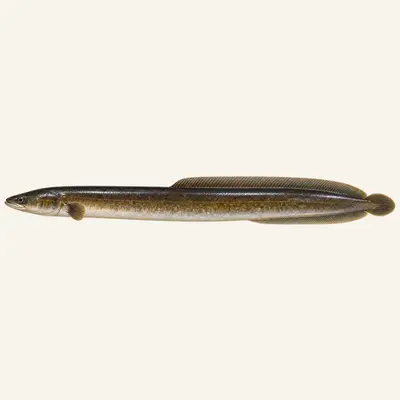
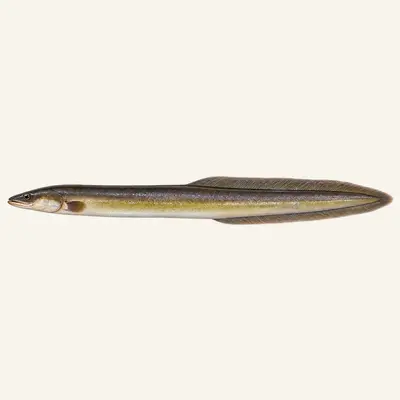
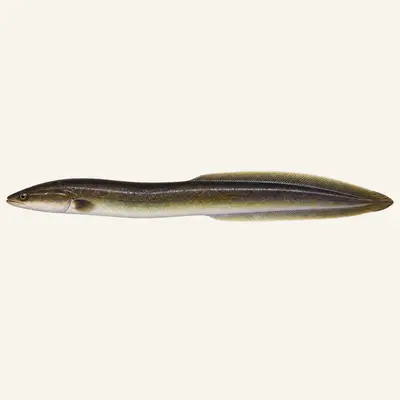
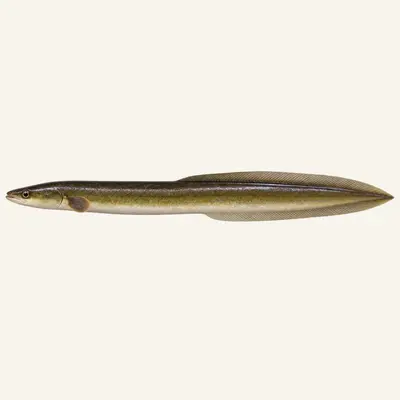
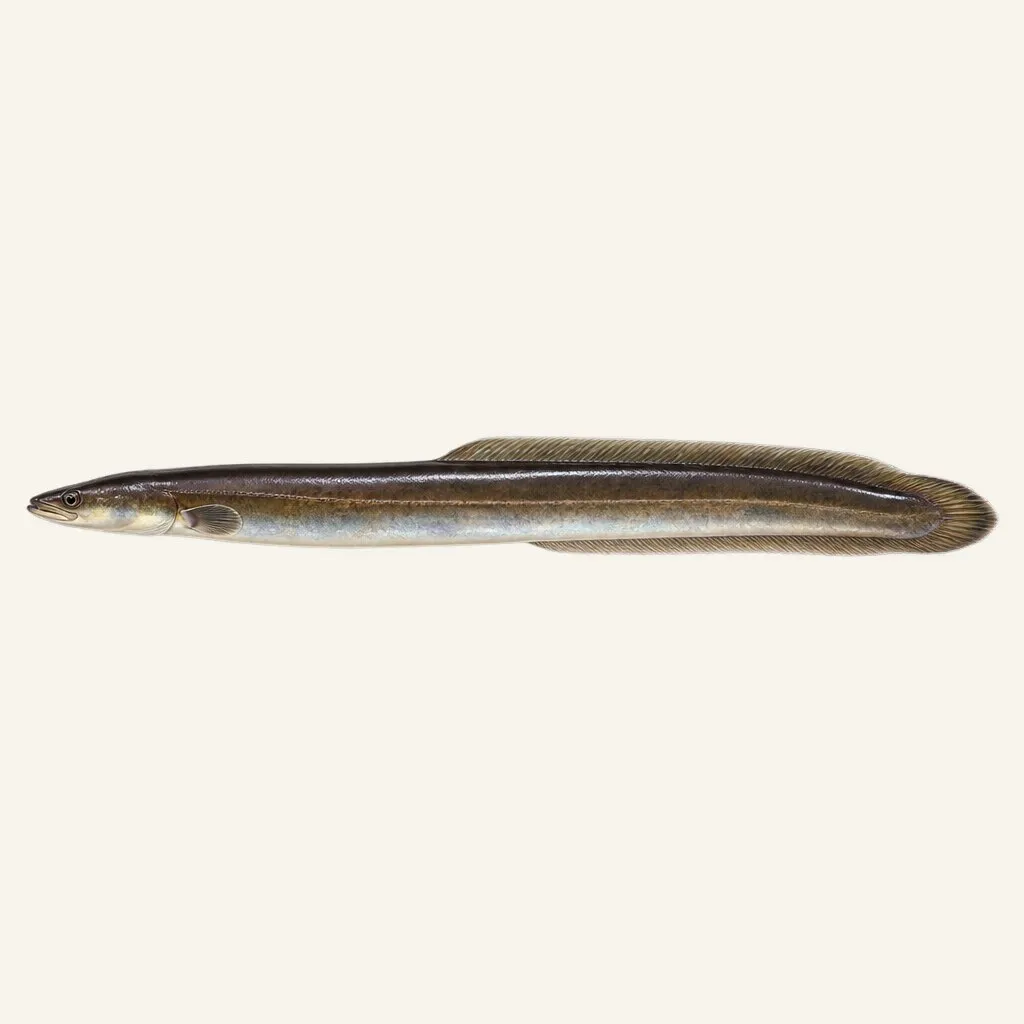
The Japanese eel is a highly prized catadromous fish in Asia, especially in Japan where it is an iconic culinary species. Its cylindrical, elongated body, covered in abundant mucus, has a grey-brown back and a cream to yellowish belly, with tiny scales embedded beneath the skin.
Calendar
Recorded in 5 countries
China · Hong Kong SAR China · Japan · South Korea · Taiwan
GBIF occurrence records — native and introduced populations combined.
Its range
The feeding range covers East Asia: Japan, the East China Sea, Taiwan, Korea, China and the northern Philippines. It has also been moved outside that range deliberately.
The span is thermal more than geographic. Water from 4 to 27 degrees means the same species grows in northern Japanese rivers that freeze at the margins and in Luzon streams that never drop below room temperature. Recorded depth runs from 1 to 400 m, the deep end belonging entirely to the marine phase.
Identifying it
Plain. No marbling, no blotches, no reticulation of any kind — and in East Asia that absence is the identification, because the species it shares rivers with are patterned. A mottled eel from a Japanese or Taiwanese stream is something else.
Beyond that there is one usable number, the vertebral count, at 114 to 118. Asian eels resist external keys and the literature falls back on counting for the same reason it does in the Atlantic.
A detail from the record says more about the build than any description. Common length is 40 cm, and the species stays light for its length — worth holding on to before reading any account of a large one.
Breeding
The spawning ground is a front, not a place. It is put in the western Mariana Islands, near 15 degrees north and 140 east, at a boundary between water masses of different salinity — and a salinity front moves. It shifts with season and with year, so the site is defined by an oceanographic feature that has to be found again each time rather than by a position that stays put.
That distinction matters for the larvae. Where the front sits in a given spring decides which currents pick them up, and therefore what proportion of a year class ever reaches the coast of Asia. A bad year is not a failure of spawning but a failure of delivery.
One caution belongs on this page. Almost everything else stated about how this eel breeds is carried over from the European species by assumption, and the reference works say so in as many words. The animal is semelparous and it goes to sea; past that, detailed claims about its reproduction are inference from a relative, not observation of this fish.
The water it needs
Juveniles arrive from the sea and run up the rivers in schools, which is not how eels are usually described. They disperse later; the schooling belongs to the ascent.
Overland movement is part of the repertoire and it is nocturnal. The animal crosses wet ground from one water body to the next, and in a landscape of paddy, irrigation canals and small reservoirs that stops being a curiosity. It is the mechanism by which the species occupies water that no watercourse connects, and it means an isolated pond can hold eels without anybody having put them there.
Growth happens in fresh and brackish water; the sea is for the two ends of the life, arrival and departure.
Areas
- Estuaries and river mouths
- Muddy river banks
- Irrigation canals
- Pond hollows
Techniques
- Nocturnal bottom fishing
- Worm laid on substrate
- Rod tip fishing
- Set line
Baits
- Earthworms
- Insect larvae
- Fish chunks
- Freshwater shrimps
What it eats
Crustaceans, insects and fish. That is the whole of what the documentation records, and it is enough to place the animal: a bottom predator with no specialisation, feeding in the dark on whatever the reach it lives in contains.
The shortness of the list is a gap in the record rather than a narrow diet. Nothing suggests this eel is choosier than the others in its genus, and everything about its build says it is not.
How to catch it
This is the most expensive food fish in Japan, and that single fact governs the species more thoroughly than any part of its biology. It sustains an international trade in juveniles, a processing industry that sells the flesh fresh, smoked, canned and frozen, and a set of preparations — steamed, broiled, baked — that a very large market wants year round. The animal is also used in Chinese medicine.
The industry that supplies that market cannot breed the fish. Farms grow eels to size in enormous numbers, but nobody has closed the life cycle at commercial scale, so every farmed eel on every plate began as a wild juvenile caught at a river mouth. Aquaculture here does not relieve pressure on the wild population; it is the reason for it.
Rod fishing follows the pattern of the genus — dark, on the bottom, over known marks, with a bait that works on smell. The slime defeats a dry hand and a damp rag solves it.
Fishing and trade in this species are controlled across much of its range, and the controls differ by country and change between seasons. What holds on a given water in a given year comes from the authority that sets it, not from custom.
Conservation · Endangered (IUCN) — This species is threatened with extinction. Always release it (no-kill), handle it with the utmost care and check local rules — fishing for it may be prohibited.
Conservation
The pressure point is not the adult. It is the juvenile, caught at the estuary before it has grown, let alone bred, and the volume caught tracks the price of the finished product rather than the state of the stock. When a kilo of glass eels is worth what it is worth, effort rises in a poor year exactly as it does in a good one.
Add the ordinary structural losses. The catchments this fish uses are among the most heavily engineered in the world, and an eel that cannot get up cannot come back down; estuarine habitat has been reduced across the same coasts.
Then the arithmetic that applies to every member of this genus and forgives nothing. There is one reproductive event per animal, at the end of a crossing of several thousand kilometres, and it has not happened yet at the moment the fish is taken.
Regulations
Check the local regulations in force (legal size limits, closed seasons, bag limits).
For guidance only. Legal sizes, quotas and open seasons vary by location and season: always check the local regulations in force before fishing.
Other names
Japanese eel in English, unagi in Japanese — a word that names the animal and the dish it becomes, most often glazed and grilled as kabayaki.
The confusion that catches English speakers is on the menu rather than in the water. Unagi and anago both arrive translated as eel, and they are not the same fish: anago is a conger, marine, a different family, paler-fleshed and prepared differently. Ordering one and expecting the other is common enough that the two words are usually left untranslated.
Sources: fishbase.se · api.gbif.org