New Zealand longfin eel
Anguilla dieffenbachii · Anguillidae
- Freshwater
- Migratory
- Medium
- Size
60–185 cm
- Weight
0.5–25 kg
Where to fish
- Lake
- River
Habitat icons: Flaticon
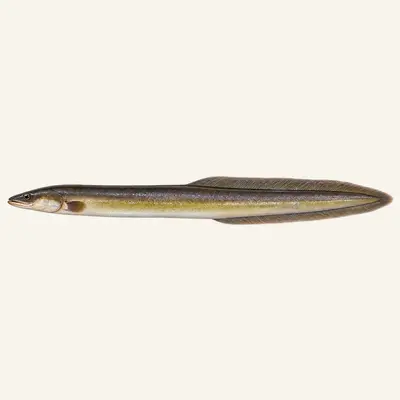
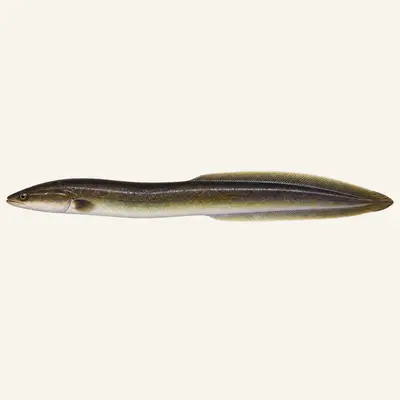
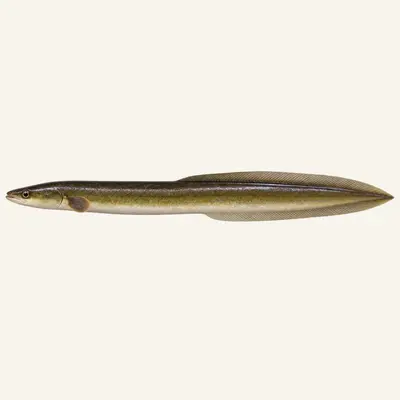
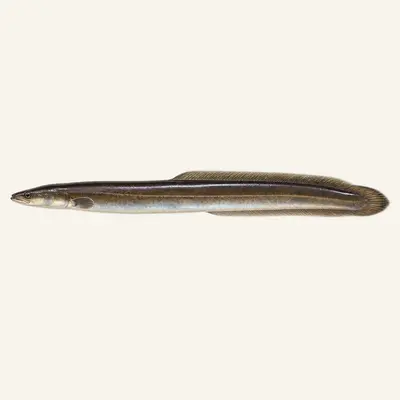
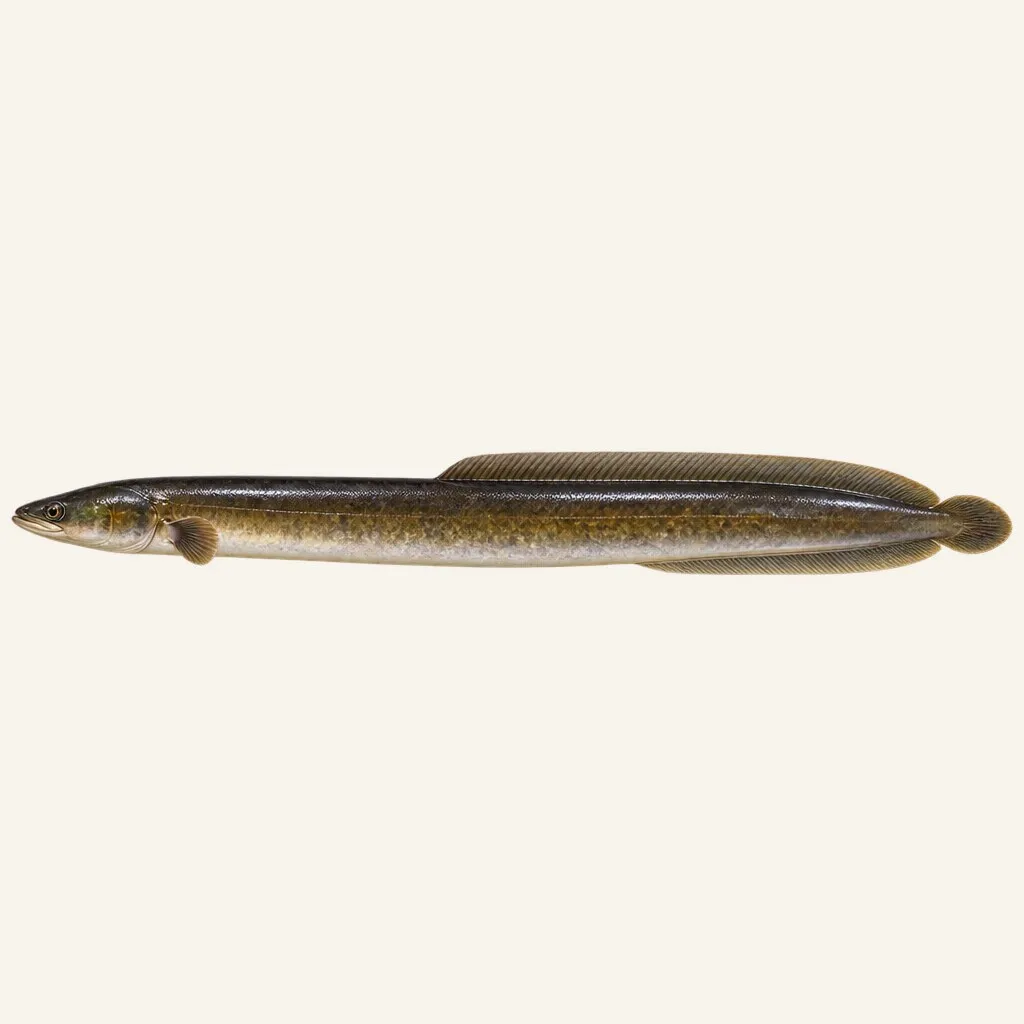
The longfin eel is New Zealand's largest eel, recognisable by its greatly extended dorsal and anal fins running along most of the body, and its mottled brownish-green skin.
Calendar
Recorded in 1 country
GBIF occurrence records — native and introduced populations combined.
Its range
The species is found in New Zealand and nowhere else, between 34 and 47 degrees south. Endemism on that scale is the fact that governs its future: a fish whose entire world population sits in the rivers of one country has no external stock to draw on, and no second range to fall back into if the first one fails.
It is also the most southerly distribution in the genus. Other eels grow in subtropical water; this one grows in cold water, which slows everything down. The same 80 cm that a tropical relative would reach quickly takes this animal a very long time, and that single consequence of latitude explains both its size and its vulnerability.
Identifying it
No freshwater eel anywhere grows larger. The published figures put the species well beyond every other member of the genus.
Two numbers matter more in practice. Common length is 60 cm for males and 100 cm for females, so the sexes are separated by size here as clearly as they are anywhere in the family, and anything substantial is female.
Then the figure that should be read as history rather than biology. The really large fish appear in the record, but they are rare and they are mostly old accounts; in recent decades few individuals exceed 120 cm. That contraction is not a difference of measurement technique. It is a century of removal, written into the size distribution of a species that takes decades to build a large animal.
Breeding
Maturity does not arrive before 80 cm. In cold southern rivers, on a growth rate that slow, reaching that length takes several decades — and every fish under it has reproduced nothing at all.
That threshold defines the population an angler actually meets. The great majority of eels in a New Zealand river are below the size at which the species becomes capable of breeding, so almost every individual encountered is still owed its one reproductive event.
Spawning happens at sea, once, and the animal dies afterwards. It is oviparous, and nothing about the site or the act has been observed directly for this species.
The water it needs
Stony rivers. The species occurs commonly in lakes and rivers across the country, but the preference is for hard beds and moving water, and that is the opposite of what the short-finned eel wants from the same landscape.
The two divide New Zealand fresh water between them by current speed. Slow and still goes to one, stony and flowing to the other, and the type of water indicates which species is present before anything is caught. In practice the boundary is not absolute and mixed reaches hold both, but the bias is strong enough to work from.
Areas
- New Zealand mountain rivers
- Vegetated undercut banks
- High-altitude lakes
- Deep pools
Techniques
- Nocturnal bottom fishing
- Set line with natural bait
- Undercut bank fishing
- Static line
Baits
- Earthworms
- Fish chunks
- Crayfish
- Aquatic larvae
How to catch it
Read the water first. Current over stones points to this species, flat and weedy water to its neighbour, and getting that wrong wastes a night.
The rest follows the habits of the genus: after dark, on the bottom, on a bait that smells. The slime makes the fish impossible to hold in a dry hand, and force achieves nothing except damage to the skin.
Size changes what a capture means here more than in any other eel. A fish over a metre is an old animal, close to or past the length at which it can finally breed, and it is precisely the size class that has become scarce. Anything of that order is worth returning with care and without delay.
The fishery is managed in New Zealand, with commercial, customary and recreational components under separate arrangements, and the terms differ by catchment and by year. They are obtained from the managing authority before a trip, not worked out on the bank.
Conservation · Endangered (IUCN) — This species is threatened with extinction. Always release it (no-kill), handle it with the utmost care and check local rules — fishing for it may be prohibited.
Conservation
Three traits work against this species at once: a range confined to a single country, growth slow enough to push maturity out by decades, and a life that allows exactly one attempt at reproduction.
The clearest signal is the collapse in size. When the biggest fish become historical anecdotes and the working maximum drops to around 120 cm, what has gone is the oldest females — the individuals carrying the largest egg counts, and the ones that took the longest to produce. Removing them costs the population something it cannot replace within a human lifetime.
Downstream passage adds to it. An eel that spent thirty years reaching breeding condition and then cannot get past a dam or a turbine to the sea represents a total loss, and it is a loss that leaves no trace in catch records, because the fish was counted as present right up until the moment it failed.
Regulations
Check the local regulations in force (legal size limits, closed seasons, bag limits).
For guidance only. Legal sizes, quotas and open seasons vary by location and season: always check the local regulations in force before fishing.
Other names
Long-finned eel in English, longfin in local usage, tuna in Maori — the same word that is used for the short-finned species, which is why Maori and settler accounts alike often cannot be resolved to one animal.
The English name is a genuine field character rather than a label: the dorsal fin starts far forward on the body, well ahead of the anal, and that origin is what distinguishes it in the hand.
The scientific name commemorates Ernst Dieffenbach, the naturalist who travelled the country for the New Zealand Company in the early nineteenth century and produced the first systematic account of its animals.
Sources: fishbase.se · api.gbif.org