Short-finned eel
Anguilla australis · Anguillidae
- Freshwater
- Migratory
- Medium
- Size
45–130 cm
- Weight
0.1–7.5 kg
- Lifespan
32 years
- Depth
0–3,000 m
Where to fish
- Estuary
- Lake
- River
Habitat icons: Flaticon
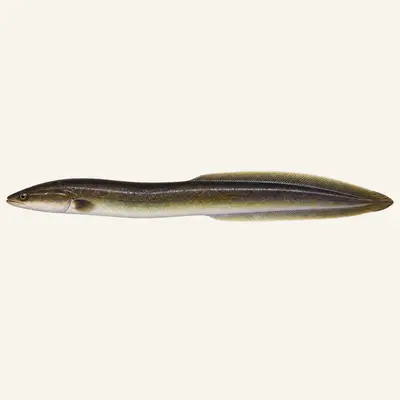
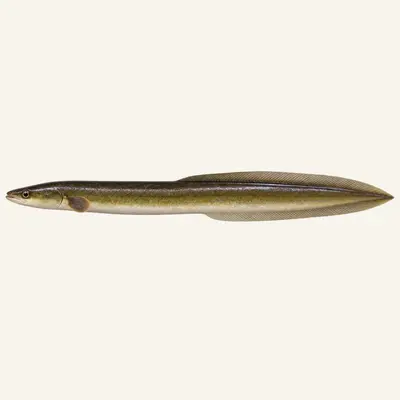
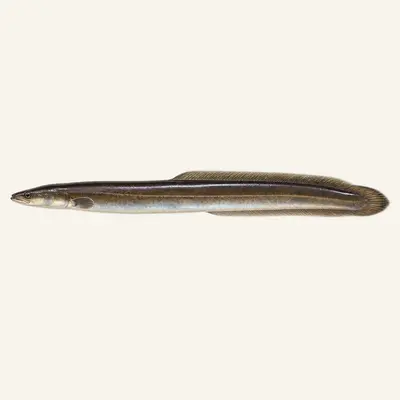
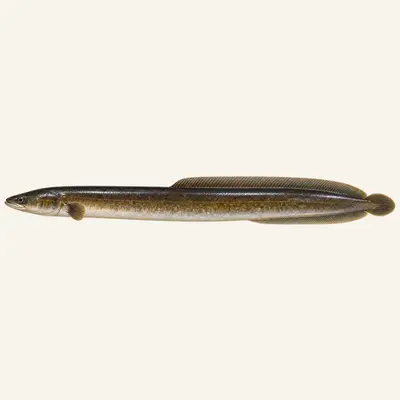
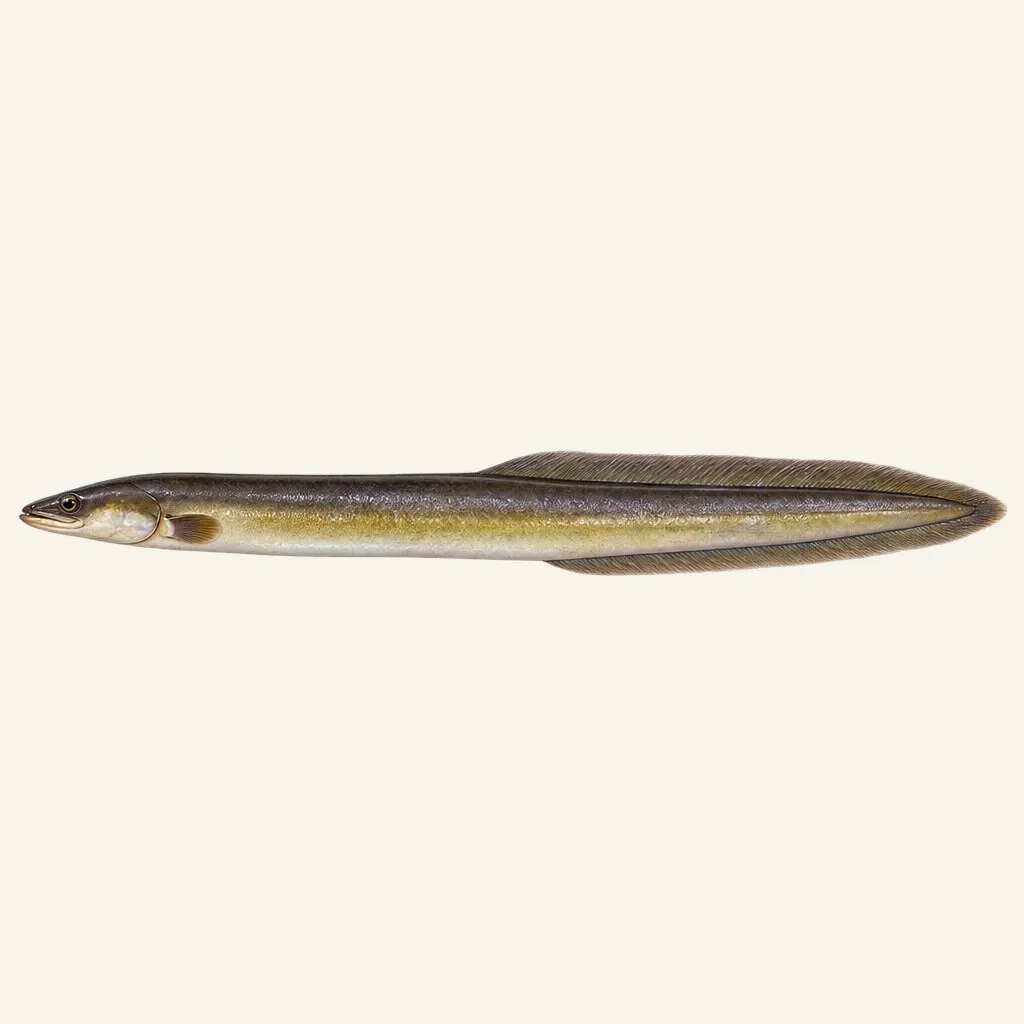
The shortfin eel is an Oceanian catadromous fish that inhabits rivers, lakes, and coastal wetlands before migrating to the sea to spawn. Its serpentine body, coated in thick mucus with rudimentary scales, displays an olive-brown or grey back and a silvery to cream-white belly.
Calendar
Recorded in 2 countries
GBIF occurrence records — native and introduced populations combined.
Its range
The range covers the south-west Pacific: the east coast of Australia and the whole of New Zealand, running north as far as New Caledonia, between 18 and 47 degrees south. There are records from Western and American Samoa. Museum material from Fiji and Tahiti is treated as doubtful, which is a useful reminder that a specimen label is not a distribution.
The Australian and New Zealand forms are sometimes given subspecific rank. Whether that is accepted or not, the two are supplied by the same spawning ground, so any separation between them is something that happens after the larvae disperse rather than a division of the breeding stock.
Recorded depth reaches 3,000 m. That figure belongs to the ocean crossing and has nothing to do with the swamps and lakes where the fish spends its life.
Identifying it
The name points at the dorsal fin. It begins only a short way ahead of the anal, where in the long-finned eel sharing the same New Zealand rivers it starts much further forward, up towards the pectorals. On a fish in hand that is the quickest of the field marks and the one worth learning first.
It does not settle every case. The species this eel is genuinely confused with is Anguilla obscura, and the only reliable way to separate the two is to count vertebrae — no external character is dependable enough to decide from a photograph. Anyone identifying tropical Pacific eels on appearance alone is guessing.
Size does part of the work instead, because the sexes barely overlap. Females migrating out of Lake Ellesmere, in Canterbury, measured between 48 and 102 cm; the males in the same run measured between 34 and 55. A big fish of this species is a female, and the rule holds well enough to be used.
Breeding
Every population of this eel breeds in one place. Eastern Australia, New Zealand, New Caledonia: all of them send their adults to a single Pacific spawning ground, and the species reproduces nowhere else. It spawns once and dies there.
That is a structure with no redundancy in it. A freshwater fish spread over many catchments can lose a river and persist; a species whose entire reproduction happens at one oceanic point has nothing to fall back on if conditions there fail. Every river in the range is downstream of the same event.
The adults leave fresh water to make the crossing, females much the larger of the two sexes, and the animal that leaves has no second attempt in it.
The water it needs
Still water. Streams, lakes and swamps are all used, but the preference runs strongly to slow or standing water, and that preference is the single most useful thing to know about the species in New Zealand.
It is what separates it from the long-finned eel, which holds the stony, running rivers of the same country. Two eels, one land mass, divided by current speed rather than by altitude, catchment or temperature. Reading the water identifies the animal before anything comes out of it.
Areas
- Coastal lagoons
- Muddy river banks
- Wetlands and marshes
- Stream mouths
Techniques
- Nocturnal bottom fishing
- Set line with natural bait
- Bank worm fishing
- Static line
Baits
- Earthworms
- Fish chunks
- Shrimps
- Aquatic larvae
What it eats
Fish, crustaceans, molluscs and worms, insects both aquatic and terrestrial — and aquatic plants.
The plant material is the entry that stands out. This is a genus taken to be strictly carnivorous, and the presence of vegetation in a diet list points to something less selective than a predator: an animal that processes what the bottom offers rather than choosing between prey.
How to catch it
Slow and standing water first, and that decision comes before the choice of bait or mark. Swamps, lake margins, the flat sections of a river, backwaters behind obstructions. Looking for this eel in a stony run means looking for the other species.
After that the approach is what the genus dictates: darkness, the bottom, a bait that works on scent, and a mark held rather than a bank walked. Movement contributes little here.
The flesh is of high quality and takes smoking particularly well, which is why both countries in the range have had commercial fisheries for it for a long time and why the fish is a food resource before it is a sport one.
The maximum reported age is 32 years. A heavy eel is therefore a decades-old female that has produced nothing yet, which is worth weighing before it goes into a bag.
Conservation · Near Threatened (IUCN) — This species is in decline. Release your catch quickly and handle it with care — wet hands, as little time out of the water as possible.
Conservation
Three things compound here without any of them cancelling the others: one spawning ground for the entire species, one reproductive event per animal, and a commercial fishery that operates on the growing stock in fresh water, meaning on fish that have not yet been to sea.
Access to the ocean is the constraint that carries the most weight. Every barrier on a lowland river sits across the route of an animal that has spent twenty or thirty years getting ready to use it, and an adult stopped on the way down is that whole investment written off.
The delay in the signal is what makes the problem hard to see. River populations stay visibly abundant while recruitment falls, because the fish now present were produced decades earlier. Abundance in the catchment says nothing about how many larvae arrived last year.
Regulations
Check the local regulations in force (legal size limits, closed seasons, bag limits).
For guidance only. Legal sizes, quotas and open seasons vary by location and season: always check the local regulations in force before fishing.
Other names
Short-finned eel in English, shortfin in Australian usage, tuna in Maori.
The Maori word covers both New Zealand species without distinguishing them, which matters because they are not interchangeable: different water, different maximum size, different outlook. Older accounts that name only tuna cannot be assigned to one species after the fact.
For English speakers the trap is tuna itself, which is unrelated to the marine fish of the same spelling and has no connection to it whatsoever.
Sources: fishbase.se · api.gbif.org