Mud sunfish
Acantharchus pomotis · Centrarchidae
- Freshwater
- Predators
- Medium
- Size
14–21 cm
- Weight
0.0 kg
- Water temp.
10–22 °C
Where to fish
- Pond
- River
Habitat icons: Flaticon
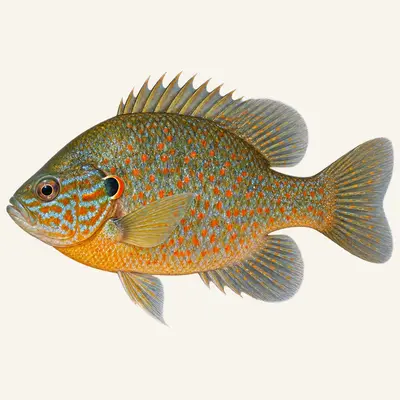
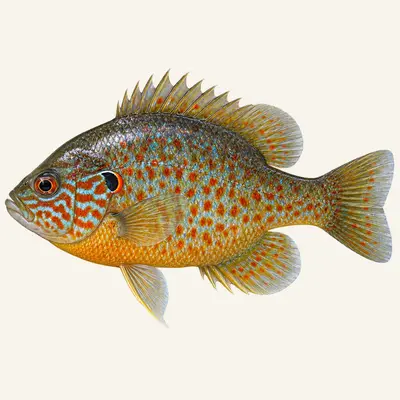
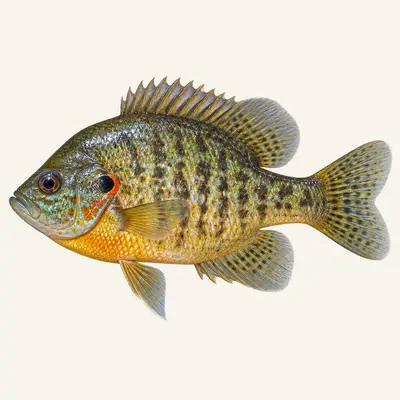
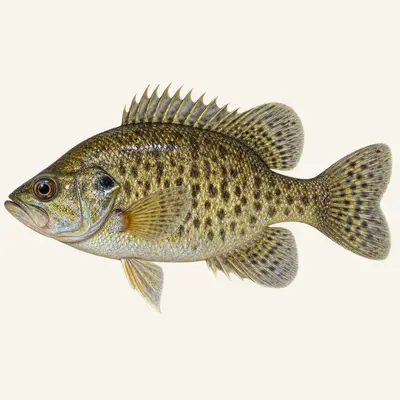
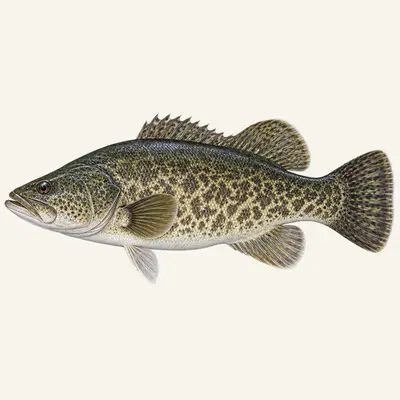
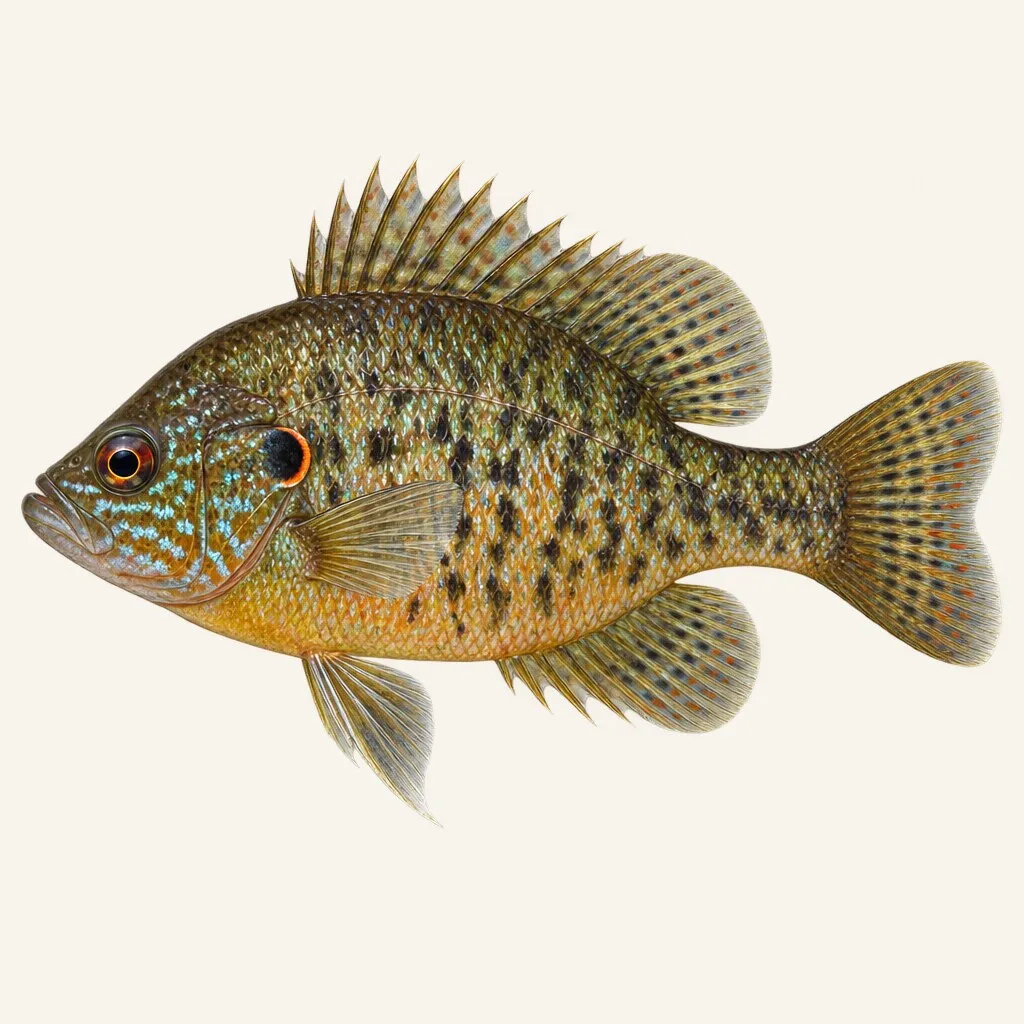
The mud sunfish is a stocky predator of the Centrarchidae family, with a deep, compressed body showing greenish hues and dark lateral bands. It lives in swamps, bayous, and slow, muddy waters of eastern North America.
Calendar
Recorded in 1 country
GBIF occurrence records — native and introduced populations combined.
Its range
Two blocks of range, and the larger one is the shape of a sediment plain rather than a region.
The main block covers Atlantic Coastal Plain and lower Piedmont drainages from the Hudson in New York to the St Johns in Florida. The phrase carrying the information is "lower Piedmont". The Piedmont is the older, harder ground lying inland of the plain, and the boundary between the two is a step the rivers drop over, traceable for hundreds of kilometres from New Jersey down into Alabama. The fish comes up to the foot of that step and no further.
The northern end looks wrong for a swamp species until the same rule is applied to it. The Hudson is a long way from the Carolina pocosins, but the coastal plain itself extends that far, and the plain is what is being followed.
The second block is smaller and detached: Gulf Coastal Plain drainages in northern Florida and southern Georgia, from the Suwannee to the St Marks. A handful of neighbouring rivers, against an entire seaboard.
Identifying it
Dark bands down the flank, on a deep body flattened from the sides, greenish over it. Those bands come from the description this site renders above the text; the FishBase summary behind the rest of the page says nothing whatever about colour or pattern, and gives no ray counts, no scale rows and no weight. For markings, the catalogue is the better of the two sources here.
The bands are worth attending to because the warmouth shares this water and is also a stocky, dark centrarchid, and the published diagnosis of that species rests on its jaws rather than on anything it wears. Nothing in the record consulted for the mud sunfish describes its mouth at all, which means the comparison has to be made on what is written about each fish and not on what is missing from one of them.
The water it needs
Mud and detritus. The bottom is named twice in the record and the second word is the one that describes how the place works.
A black-water stream on the coastal plain does not run on algae. It runs on litter: leaves, twigs and wood that fall in, break down on the bed and feed everything above them. What dissolves out of that litter stains the water brown, so it stays clear and goes dark at the same time — an animal a metre down in it is working without light in water that is not turbid.
Around that bottom the list is all slack water: vegetated sloughs, lakes, and the pools and backwaters of creeks and small to medium rivers. Recorded temperatures run from 10 to 22 degrees, the lower figure belonging to the northern end of the range rather than to any swamp in Florida. Hardness spans 10 to 25, which is a wide band and says this is not a fish of one water chemistry.
Areas
- Coastal swamps
- Bogs and acidic ponds
- Muddy-bottomed streams
Techniques
- Bottom float fishing
- Toc fishing in swamps
- Light live bait fishing
Baits
- Earthworms
- Aquatic larvae
- Small red worms
How to catch it
Nothing is published about what this fish eats. The biology rubric describes the bottom it sits on and stops — no prey list, no size at maturity, no spawning account, no recorded fishery, not even a weight.
Those blanks amount to a single blank. Nobody wrote the diet down because nobody targets the species, and with no diet there is no reasoning towards a bait. What remains is the deduction from the address: something small, alive and motionless, presented down in the mud and the detritus rather than above it. The methods listed here are slow and static for that reason — a float set to fish hard on the bottom, dapping in marsh, a light live bait — and the fish they are aimed at has a common length of 14 cm.
Sight will not help. Fishing black water means placing a bait by feel and by memory of the bottom, in water that is transparent and unlit at once. A mud sunfish lifted out of a coastal-plain slough is also going to be recognised only by somebody who already knew the species existed.
Regulations
Check the local regulations in force (legal size limits, closed seasons, bag limits).
For guidance only. Legal sizes, quotas and open seasons vary by location and season: always check the local regulations in force before fishing.
Other names
Mud sunfish, pez sol del fango, persico sole di fango, Schlamm-Sonnenbarsch, peixe-sol do lodo, crapet de vase. All six names put the animal in the mud and not one of them describes it.
In English the mud is a liability. Mudfish is in wide use across the American South for the bowfin, a far larger and entirely unrelated animal that occupies the same swamps, and a report of a mud something out of a coastal-plain slough has therefore narrowed nothing.
Acantharchus holds this species alone, so the scientific name at least points at one animal. The vernacular does not: sunfish covers most of the family in ordinary speech, and the qualifier in front of it carries the whole distinction between one species and another.
Sources: fishbase.se · api.gbif.org