Golden trevally
Gnathanodon speciosus · Carangidae
- Saltwater
- Coastal
- Medium
- Size
75–120 cm
- Weight
4.7–15 kg
- Depth
0–80 m
Where to fish
- Reef
Habitat icons: Flaticon
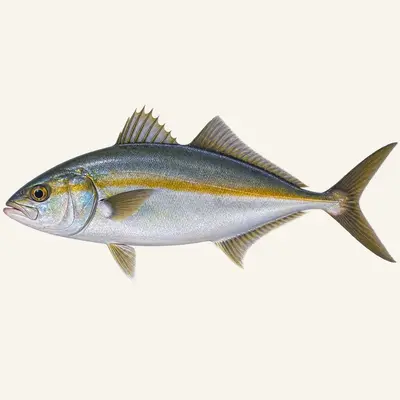
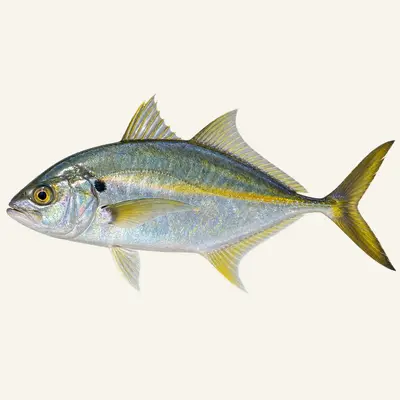
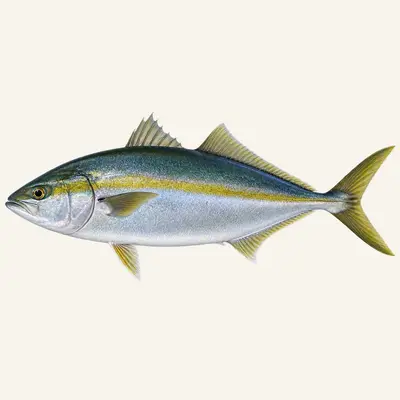
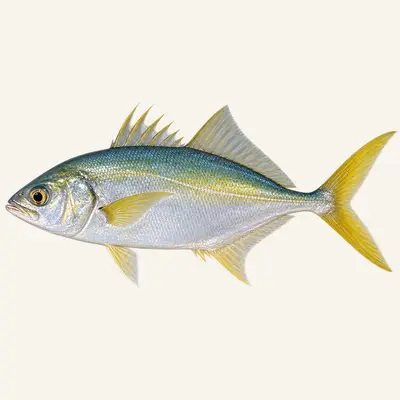
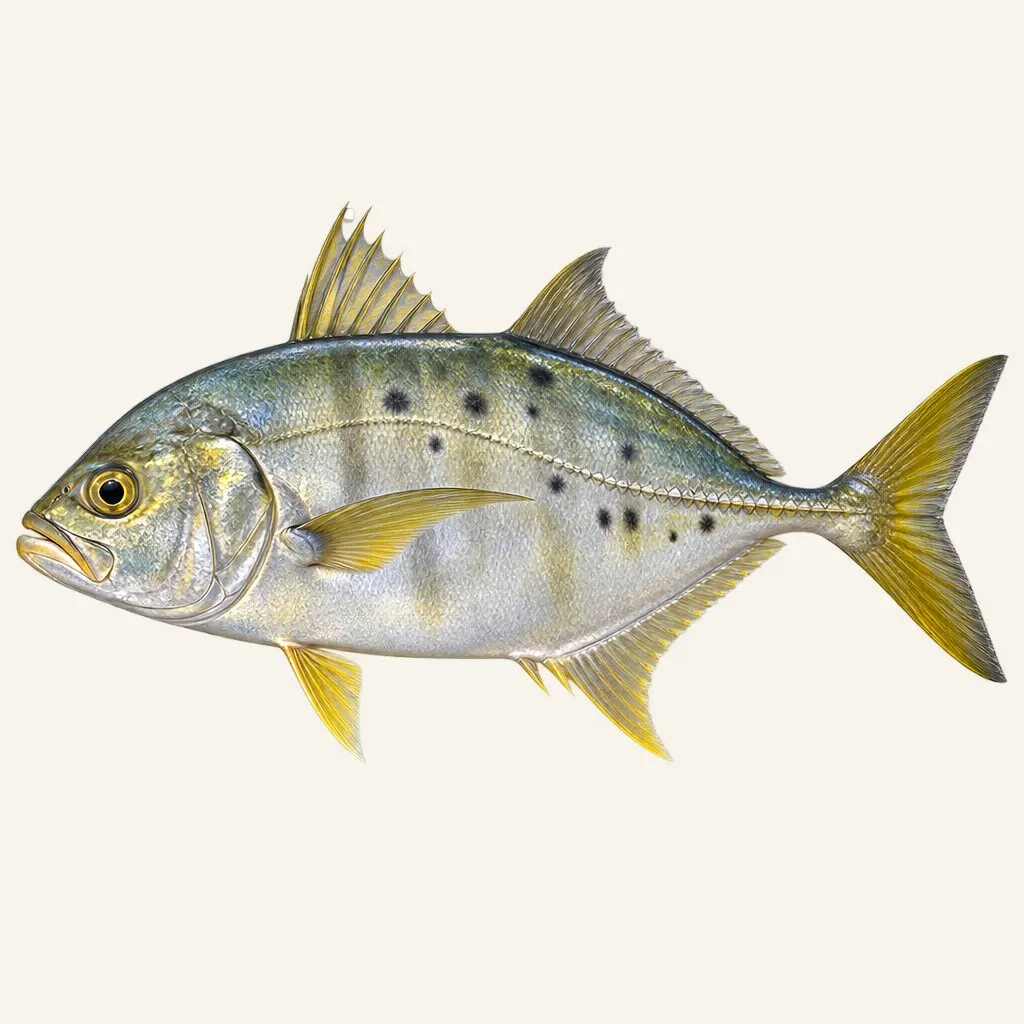
The golden trevally is one of the most recognisable of the tropical Carangidae: its deep, compressed body displays brilliant golden hues and dark vertical bars that fade with age. Juveniles often accompany large pelagic fish, feeding on particles they dislodge.
Calendar
Recorded in 27 countries
Australia · Colombia · Costa Rica · Egypt · Eritrea · Fiji · French Polynesia · India · Indonesia · Japan · Madagascar · Malaysia · Maldives · Mexico · Mozambique · New Caledonia · Panama · Papua New Guinea · Philippines · Saudi Arabia · Seychelles · Singapore · Sri Lanka · Taiwan · Thailand · United Arab Emirates · United States
GBIF occurrence records — native and introduced populations combined.
Its range
The range is Indo-Pacific and it reaches further east than most of the family manages: from KwaZulu-Natal in South Africa north to Mie Prefecture in Japan, and east across the Pacific to the south-western coast of Baja California Sur, the Gulf of California and Ecuador.
That last stretch is the notable one. A great many Indo-Pacific reef carangids stop somewhere in the central Pacific; this one is on the American coast as well, which puts an eastern Pacific angler and an East African angler on the same species.
Identifying it
The genus name is the diagnosis. Gnathanodon is the jaw without teeth, and the adult has none: the mouth is a protrusible tube of thick lips that pushes out, takes in sand and works it. Juveniles carry teeth and lose them as they grow.
Toothlessness on its own does not settle anything in this family. The mackerel scad's description also records both jaws without teeth, and that is a very different animal. What settles this one is the combination — a toothless protrusible mouth on a deep, compressed body, with eight dorsal spines, 18 to 20 soft rays, three anal spines and 15 to 17 rays.
Then there is the livery, which identifies the fish at a distance and only while it is young. Small ones are gold with black bars, a pattern familiar from aquarium tanks and the image most people carry of the species. It fades with age. The adult is a plain fish, and the two do not look like one animal.
The water it needs
Adults work the deep lagoon and the seaward reef, and what they work is the sand. They root in it for crustaceans and burrowing invertebrates, and they take small fishes besides. The bottom is the position, not the coral.
The social life changes three times as the fish grows, and each stage is a different way of not being eaten.
Small juveniles live among the tentacles of jellyfish, inside a stinging animal that nothing will follow them into.
Larger juveniles pilot. They swim tight against sharks and other large fishes, and they will attach themselves to a diver on the same principle. The behaviour is recorded as a way of gaining protection from likely predators, and the choice of escort is loose enough to include a human being. This is not the pilotfish's arrangement, which is built on the host's leavings; here the fish is borrowing the host's outline and nothing else.
Adults form schools and keep the escorting habit rather than dropping it with the barred livery. The species does not go below 80 m.
Areas
- Shallow lagoons
- Reef edges
- Marine seagrass beds
- Sandy channels
Techniques
- Slow bottom cast and retrieve
- Light jigging
- Live-bait fishing
- Lagoon trolling
Baits
- Live shrimps
- Small live fish
- Soft lures
- Crabs
What it eats
Crustaceans and fossorial invertebrates dug out of the sand, plus small fishes.
Fossorial means the prey is inside the sediment and not sitting on top of it, and that is the justification for the mouth. A fish with jaws and teeth grips what it can reach. A fish with a protrusible toothless tube can extend into the bottom and draw the sediment through.
That equipment is in place long before the fish is grown. Maturity comes at 32.5 cm against a common length of 75, so nearly every one met with is well past its first spawning and has been working the sand this way for years.
How to catch it
The ground is sand — in the deep lagoon, around the seaward reef — and not the structure itself. A bottom-rooting carangid is found over open sediment, so the presentations that matter stay down there: a light jig worked on the bottom, a slow lure retrieved close to it, a live bait held low.
Two properties of the mouth change the tackle. There are no teeth, so a fine leader survives, which is not something a carangid of this size usually permits. And the mouth is soft: a violent strike tears it, while a measured lift sets a hook and keeps it.
The escort behaviour is exploitable, and it is rare for a jack to hand an angler anything of the sort. A school travelling with a large fish, a ray or a diver is visible from a distance and approachable in a way that a wary school over open reef is not. Divers get followed as a matter of course, which means the fish can be located deliberately rather than stumbled on.
Conservation
Two trades take this species at two different ages, and only one of them is fishing. Juveniles go into the aquarium market for the barred gold pattern, which removes fish before they have bred at all; adults are a minor commercial catch, and the species is also farmed. A stock can therefore be thinned from the nursery end without a single boat working the reef.
The nursery is an awkward dependency in its own right. Small juveniles shelter inside jellyfish and larger ones shelter beside big animals. Neither is a habitat that can be protected by drawing a line on a chart, and both disappear when the animals do.
Regulations
Check the local regulations in force (legal size limits, closed seasons, bag limits).
For guidance only. Legal sizes, quotas and open seasons vary by location and season: always check the local regulations in force before fishing.
Other names
Golden trevally in English, golden kingfish where the same fish is landed further south, and ulua pa'opa'o in Hawaiian.
Speciosus means showy. The epithet fits the juvenile and only the juvenile: the gold and the bars are both gone by the time the animal reaches a size worth catching, so the scientific name describes the fish that goes into a tank rather than the one that comes over the gunwale.
Sources: fishbase.se · api.gbif.org