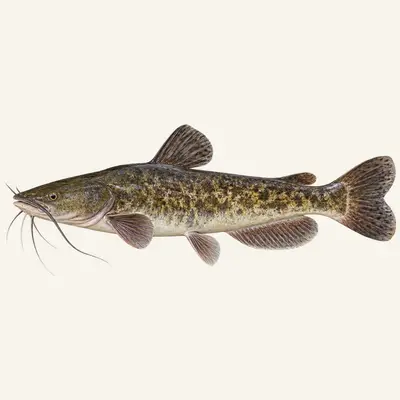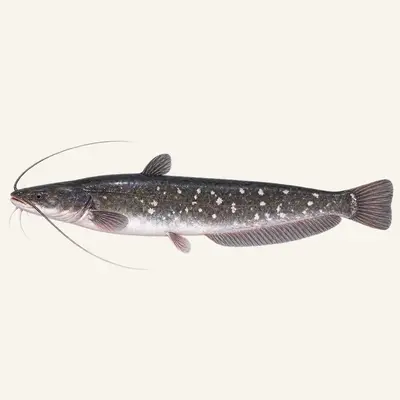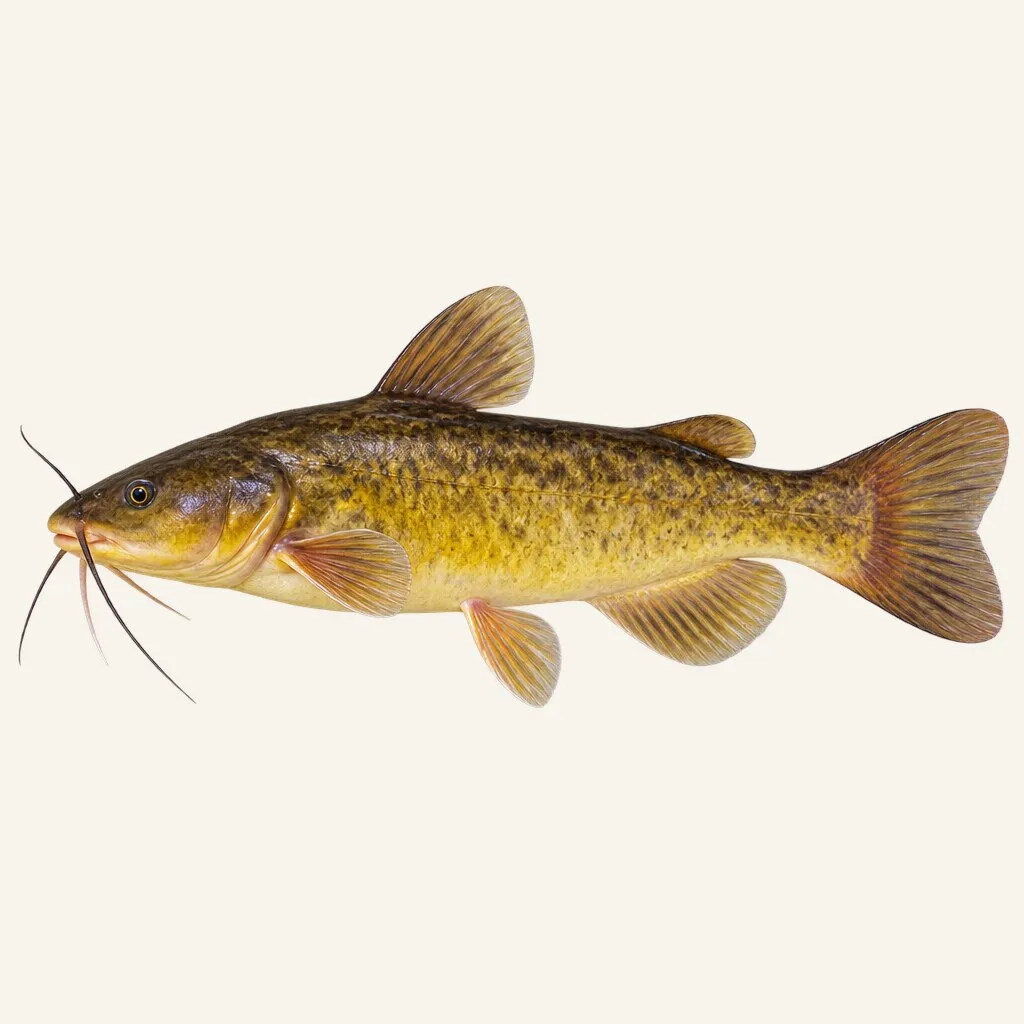
Yellow bullhead
Ameiurus natalis · Ictaluridae
- Freshwater
- Catfish
- Medium
- Size
23–60 cm
- Weight
0.1–1.9 kg
- Lifespan
4 years
- Water temp.
5–15 °C
Where to fish
- Canal
- Lake
- Pond
- River
Habitat icons: Flaticon
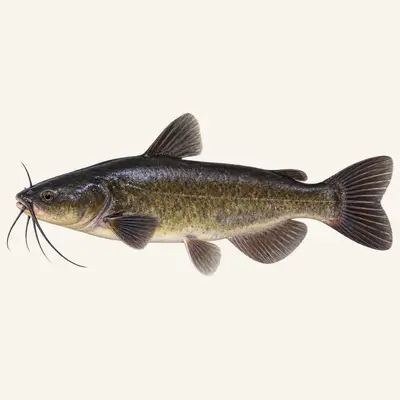
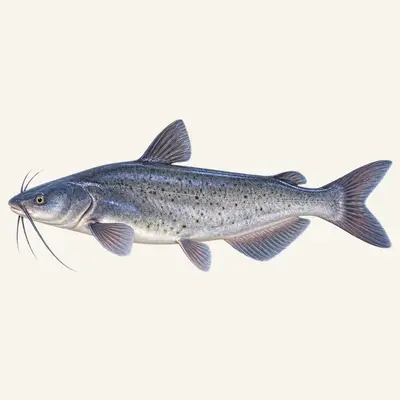
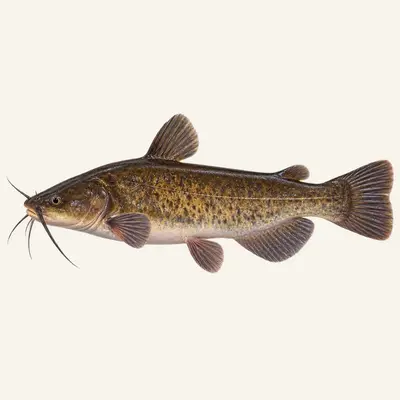
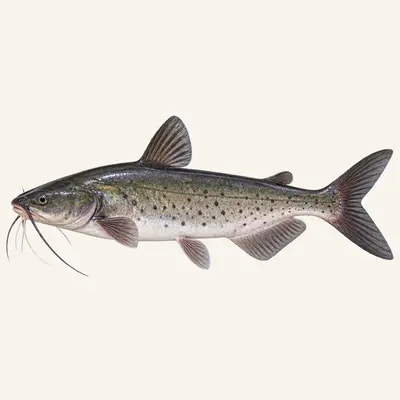
The yellow bullhead is a modest-sized North American freshwater catfish recognizable by its yellowish-olive to pale brown coloration, eight barbels and rounded caudal fin typical of Ictaluridae.
Calendar
Recorded in 3 countries
Canada · China · United States
GBIF occurrence records — native and introduced populations combined.
Its range
This is the most southerly range of the three. It runs down to northern Mexico, around the nineteenth parallel, taking in the Atlantic and Gulf drainages from New York State, plus the St Lawrence, the Great Lakes and the Mississippi from southern Quebec west to central North Dakota.
A difference in behaviour goes with that geography: the species is described as non-migratory, where the other two move about within freshwater networks. An individual is born, grows and breeds in the same reach of a watercourse, which makes populations more compartmented and the recolonisation of a cleaned-up stretch slower.
At least one country has recorded an adverse ecological effect after its introduction, which files it in the same category as its two congeners without its having spread as far.
Identifying it
The chin barbels are pale. It is the one character that resolves the question quickly inside the genus: on the two other ictalurids in this catalogue those four lower barbels are dark, grey or mottled, while here they run whitish to yellow, and the contrast against the head shows on a wet fish.
The rest follows the family pattern — a stocky body without scales, eight barbels in all, a rounded tail, lockable spines at the pectorals and the dorsal. The coat tends towards yellow-olive to pale brown, lighter than that of its relatives.
One point of biology belongs alongside the characters because it is unexpected: the maximum age reported for this species is only four years, against nine and ten for the other two. It may be no more than a shortfall in observation, but as documented, the fish lives fast.
The water it needs
Pools, backwaters and weak currents over a loose bed, in creeks as in large watercourses, along with cut-off meanders, ponds and impoundments. Submerged plant debris is cover it takes to readily, and the shallowest depth on record for it is 10 m.
The temperature band recorded, 5 to 15 degrees, cannot be the whole picture for a fish that reaches Mexico. It is a gap in the record rather than a limit on the animal, and reading it that way matters before drawing any conclusion about where the species can live from the figures alone.
Areas
- Debris-cluttered banks
- Shallow ponds
- Rural canals
- Muddy-bottomed rivers
Techniques
- Bottom fishing (weighted rig)
- Light feeder fishing
- Small live bait fishing
- Probe fishing
Baits
- Earthworm
- Chicken liver
- Maggot
- Fish chunk
What it eats
It feeds on a range of insects and on other bottom-dwelling organisms, molluscs and crustaceans in particular. Fish do not appear in what is documented for the species, which places it lower in the food chain than the brown and black bullheads, whose adults turn partly piscivorous.
For an animal of this build that is the more restrictive diet, and it is the whole of what a bait has to match.
How to catch it
It is taken on the bottom, on small animal baits, in water without current. A strictly benthic invertebrate diet makes anything that imitates a fish pointless: worms, larvae and meat baits are what correspond to its feeding.
Debris and submerged wood are worth sounding first — that is where it holds, and a clean rig fished ten metres away over bare bottom meets nothing at all.
The precaution is the family's. The spines of the pectorals and of the dorsal lock in the raised position and sting badly. A naked, slippery fish is gripped from above, with a cloth, the fingers set behind the pectorals.
Regulations
Check the local regulations in force (legal size limits, closed seasons, bag limits).
For guidance only. Legal sizes, quotas and open seasons vary by location and season: always check the local regulations in force before fishing.
Other names
Yellow bullhead in English, after the colour of the body — which is the less reliable of its two obvious characters, since colour shifts with the water while the pale chin barbels do not. The name points at the wrong feature.
Butter cat and yellow cat attach to it regionally. The second is the more misleading, because in the southern United States it more often means the flathead catfish, a far larger animal of a different genus, so a yellow cat in a report cannot be assigned on the name alone.
Sources: fishbase.se · api.gbif.org