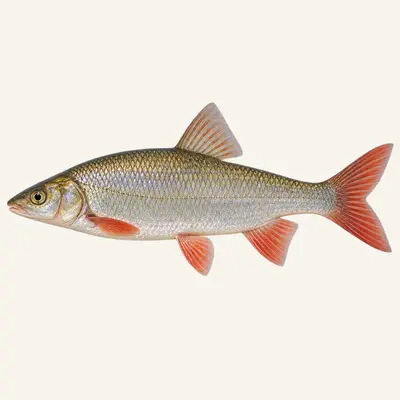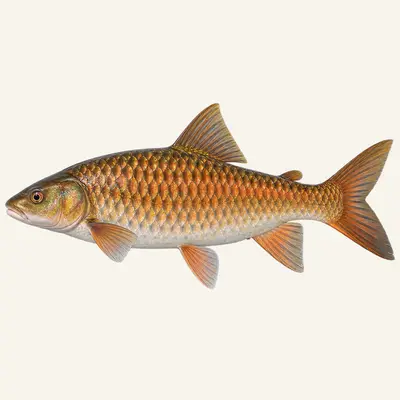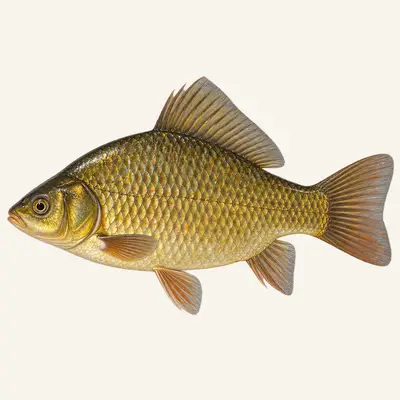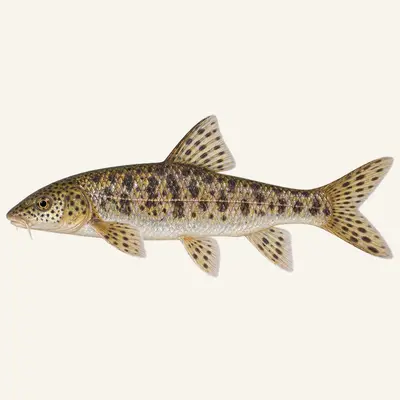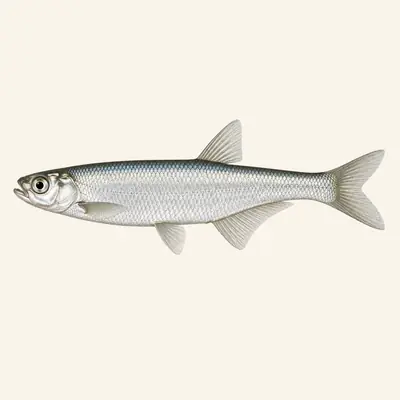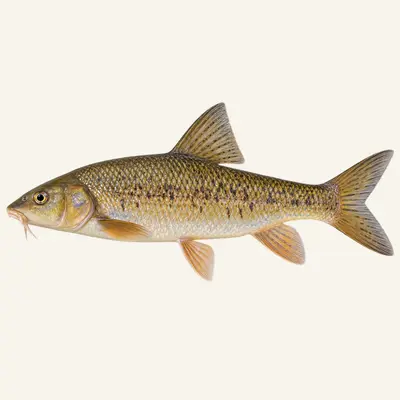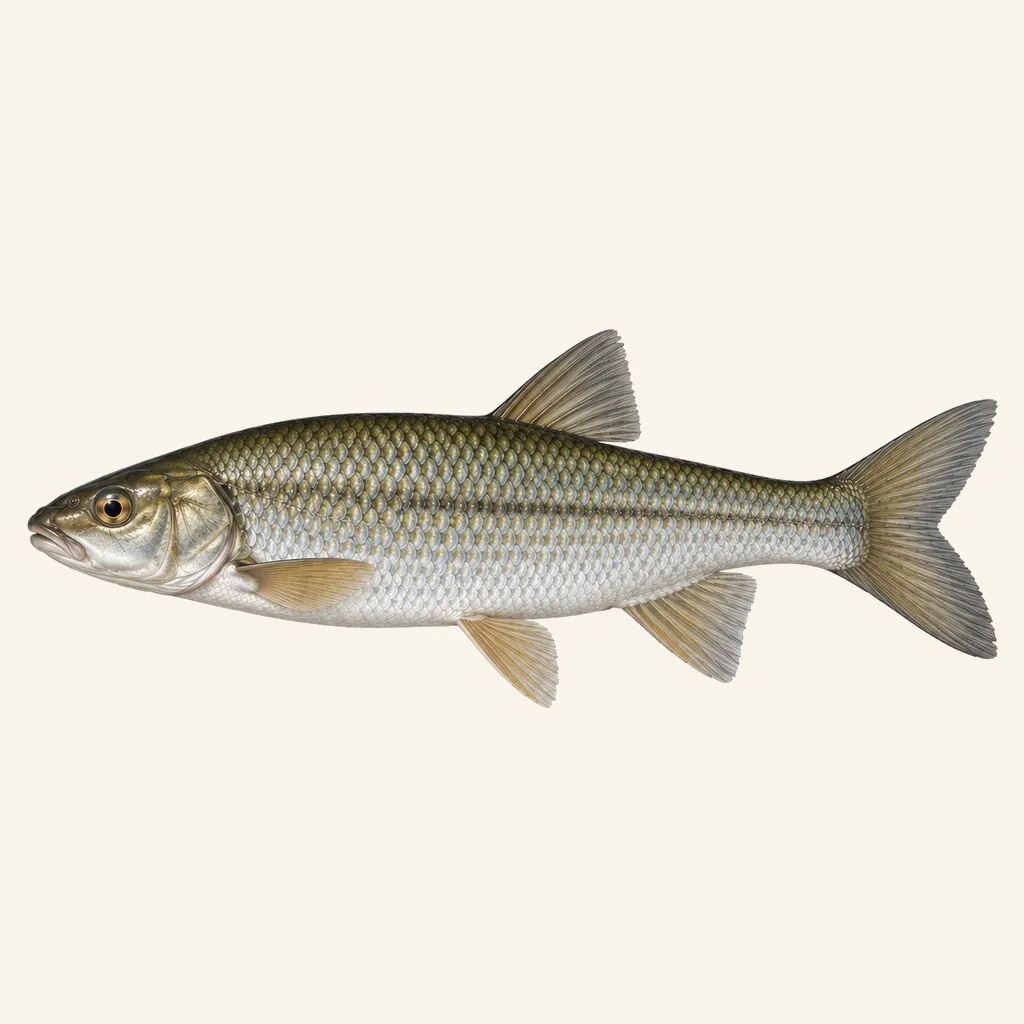
Common dace
Leuciscus leuciscus · Cyprinidae
- Freshwater
- Carp & coarse
- Easy
- Size
15–40 cm
- Weight
0.0–1.0 kg
- Lifespan
16 years
- Water temp.
4–22 °C
Where to fish
- River
Habitat icons: Flaticon
Slender silver-grey fish - favours well-oxygenated water
Calendar
Recorded in 24 countries
Austria · Belgium · Canada · Croatia · Czechia · Denmark · Finland · France · Germany · Ireland · Italy · Lithuania · Luxembourg · Moldova · Netherlands · Norway · Poland · Russia · Serbia · Slovenia · Sweden · Switzerland · Ukraine · United Kingdom
GBIF occurrence records — native and introduced populations combined.
Its range
The species holds the North Sea, Baltic, White Sea and Barents basins; the Caspian through the Volga and Ural; the Black Sea basin from the Danube to the Dnieper; the Atlantic basin through the Seine; and the French Mediterranean basin from the Rhône to the Arc.
It is only very locally present in the main Danube in Romania, in Scandinavia north of 69°N and across most of central Finland.
Two points are worth carrying. Populations from Siberia and East Asia long filed under this name are now recognised as separate species. And the dace reached Ireland as a live bait fish, an introduction route that at least one country reports has done ecological harm.
Identifying it
Dace and chub share the same water and get muddled constantly. The anal fin settles it: concave in dace, convex in chub. That is the field criterion, and it holds on a wet fish in the hand.
The mouth is subinferior to subterminal, the jaws near equal with the upper very slightly longer, and the tip of the upper lip sits level with the centre of the eye. The snout does not project. The lower jaw articulates distinctly behind the front margin of the eye.
One further character is less often quoted and quite reliable: the horizontal limb of the preoperculum is shorter than the vertical limb.
Lateral line scales run 40 to 50 plus one or two, most commonly 47 to 52. The tail is forked with 19 rays, the body slender and oval in section. A dace over 30 cm is exceptional.
Breeding
Spawning falls in March and April, in fast water over shallow gravel beds, very often in small tributaries.
Getting there involves a run of some tens of kilometres, repeated year on year. Many adults make it in autumn and winter over in the spawning stream, which puts the migration months away from the spawning itself — a detail that matters when a weir is built and nobody notices the loss until spring.
On the redds the males gather in dense numbers, each holding a small territory. Females cut depressions in the gravel and lay sticky eggs into them; the pale yellow eggs are found fixed to gravel and stones in shallow flowing water.
Maturity comes at about 18 cm.
The water it needs
Dace are gregarious and swim near the surface — unusual among cyprinids of running water, and the reason they are so often visible.
They hold large streams to large rivers with moderate to fast flow over rock or gravel. Size sorts them across the channel: the smallest fry keep to very shallow margins and move out into faster water as they grow.
Winter concentrates the adults into dense swarms in the lower reaches or in backwaters, when they have not already run up into the spawning streams. Juveniles pass the cold months in cavities along the bank.
Areas
- Moderate to fast currents
- clear rivers
Techniques
- Pole/coarse fishing
- Ultra-light
- Flies
Baits
- Maggots
- Worms
- Bread
- Insects
What it eats
Dace live on small invertebrates. A small mouth and a station in mid-water near the surface point them at the drift rather than at the bed.
There is no switch to fish with age, which is what separates them from the chub sharing the same reach. A big dace eats what a small dace eats, and that ceiling is why the species rarely passes 30 cm.
How to catch it
Everything about dace fishing is fine. A small mouth, small food items and often gin-clear water call for small hooks, small baits and light hooklengths — the exact opposite of what the barbel in the same swim demands.
Because the fish shoal near the surface, trotting a bait or drifting a fly at the pace of the current is the natural approach. A dace located is rarely a dace alone.
The bite is famously fast. The fish inspects, takes and ejects in one movement, and a late strike does not recover it.
Winter moves the fishing wholesale — to the lower reaches, the backwaters and the tributaries where the shoals have gathered.
Conservation
Dace depend on two things that river engineering removes early: clean gravel in shallow flowing water for the eggs, and free passage into small tributaries. A weir a few tens of centimetres high can end a migration of several tens of kilometres.
Their sensitivity to water quality makes them a useful indicator of the middle reaches, between the trout zone and the bream zone.
Their use as live bait carried them beyond their range, Ireland being the documented case. Moving a live fish from one catchment to another remains the commonest and least remarked introduction route there is.
Regulations
Check the local regulations in force (legal size limits, closed seasons, bag limits).
For guidance only. Legal sizes, quotas and open seasons vary by location and season: always check the local regulations in force before fishing.
Other names
Common dace in English, with dart and dare surviving regionally. Vandoise in French, Hasel in German. The word dace has been applied in North America to several unrelated small cyprinids, so an American reference to a dace almost certainly means a different fish.
Sources: fishbase.se · api.gbif.org