Trahira
Hoplias malabaricus · Erythrinidae
- Freshwater
- Predators
- Medium
- Size
65 cm
- Weight
3.8 kg
- Water temp.
20–26 °C
Where to fish
- Estuary
- River
Habitat icons: Flaticon
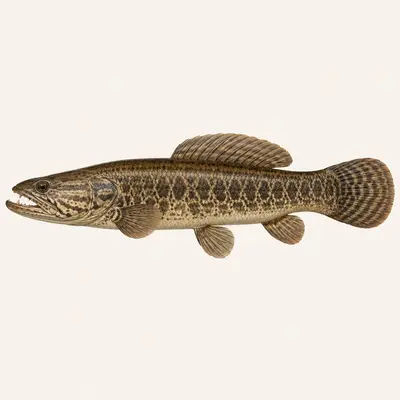
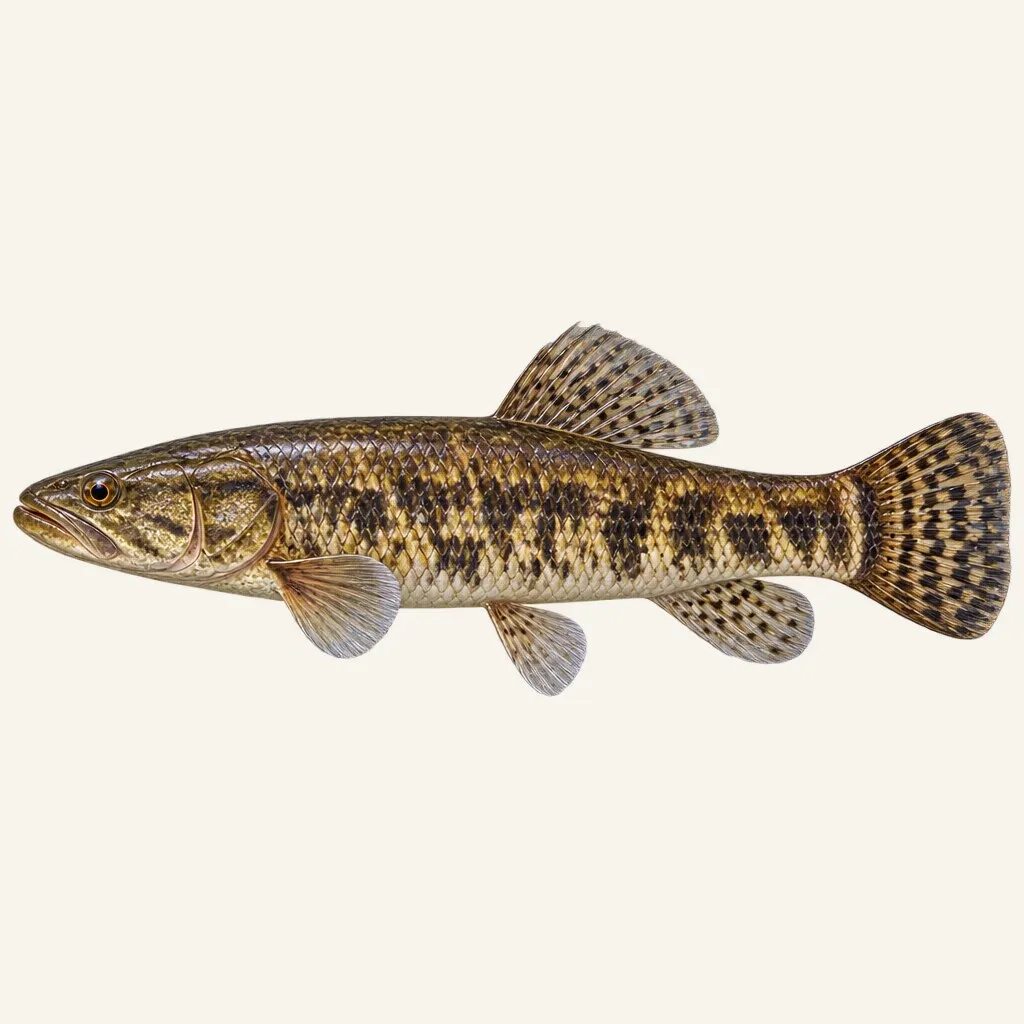
The wolf fish (traira) is a robust predator of the Erythrinidae family, with a cylindrical brown-olive body marked by dark spots and a wide mouth armed with sharp teeth. Highly resilient, it can survive in oxygen-poor water by gulping air at the surface.
Calendar
Its range
Costa Rica to Argentina, in most of the basins in between — 46 degrees of latitude across two subcontinents with almost no gap on the map.
That completeness is not a story of colonisation but of tolerance. None of the variables above stops the fish anywhere, and neither does the type of water body, since the list runs from mountain stream to farm pond. Where the geography of a species explains nothing, the limit has to be looked for elsewhere.
Identifying it
A cylindrical body, olive-brown and blotched with darker markings, ending in a broad mouth full of pointed teeth. The section is round rather than flattened from the sides, which is what a fish built to lie still in cover and launch once looks like, and it is the quickest way to tell a trahira from the deep-bodied characins it lives among.
Breeding
Fertilisation happens inside the female's anal fin. The fin cups to hold eggs and milt together against the body instead of releasing them into open water, which is close to unique and which removes dispersal from the equation entirely.
The eggs turn sticky at that point, and they are then dropped into a pit dug in shallow water at around 26 degrees. The male takes over the pit and keeps guarding it after the eggs have hatched — so what he is defending by the end is not a clutch but a brood of larvae.
Maturity arrives from 17 cm, which gives the species a long career as a spawner and means almost every adult in a population is a breeding one.
The water it needs
It breathes air. Gulping at the surface lets it hold on in water too poor in oxygen for anything else, and that single capacity explains a habitat list no other predator can match: clear fast streams high in the valleys, slow turbid water on the plains, watercourses of every size, irrigation ditches, drainage ditches, ponds.
An irrigation ditch is not a marginal habitat for this fish. It is an ordinary one. Anyone prospecting new ground should take that literally — narrow, warm, stagnant, agricultural water, the kind written off on sight for every other species, holds trahira as a matter of course.
The day is spent at rest in vegetation and the night is spent hunting. That switch is sharp and it holds across every one of those waters.
The tolerated envelope is correspondingly broad: pH 6 to 8, hardness 4 to 25, 20 to 26 degrees.
The same tolerance is why the species is farmed. A predator that can be held at density in a warm pond without the water having to be kept oxygenated is a practical proposition for aquaculture, and this one is raised commercially across its range as well as displayed in public aquaria.
Areas
- Dense freshwater weed beds
- Swampy areas and lagoons
- Cluttered river margins
- Shallow shaded waters
Techniques
- Surface lures
- Live bait fishing
- Soft lures in weed beds
- Snag-resistant popper
Baits
- Small live fish
- Frogs
- Fish-imitation soft lures
- Spinning spoons
What it eats
Adults eat fish. Juveniles live on insect larvae, crustaceans, shrimps and other small invertebrates, and the switch tracks growth.
The method matters more than the list. A hunter that spends the day motionless in weed does not pursue anything; it waits for prey to enter a strike radius, and that radius is short. The heavy muscling behind the head serves one extension, delivered once.
How to catch it
The lie is what gets fished, not the water. Since the animal is pressed into cover, a cast has to land in contact with the weed, the timber or the shaded edge; a metre off it, nothing happens.
The clock doubles the odds. Hunting starts at dusk and continues through the night, whereas daylight means going to find a resting fish, which requires passing very close and very slowly.
Handling is not a detail with this species, and the published account says so directly: live fish are difficult to hold and potentially dangerous, on account of sharp teeth, strong jaws and a slippery body. Unhooking is done with pliers and a firm grip behind the head, never with fingers inside the mouth. Most injuries come from a fish turning in the hand rather than from anything the fish intended.
Conservation
Nothing presses on the species across a range this size. What deserves care is a single, locatable individual: the male on the pit.
Through the warm season he is fixed over a few square decimetres of shallow water, aggressive, and he will charge anything that comes near. That makes him easy to find and easy to provoke, and it is exactly why the encounter is worth thinking about — a male taken off the pit is the entire protection of a brood removed at once. The eggs and larvae in that hollow have no other defence.
Regulations
Check the local regulations in force (legal size limits, closed seasons, bag limits).
For guidance only. Legal sizes, quotas and open seasons vary by location and season: always check the local regulations in force before fishing.
Other names
Trahira is the name in English, taken from the Portuguese traíra, itself a Tupi word that covers this fish and its relatives in Brazil.
Wolf fish, the alternative in circulation, is a trap. In English that name belongs to Anarhichas, the marine wolffishes of the cold North Atlantic, which have nothing to do with a tropical characiform beyond a visible set of teeth. A recipe, a photograph or a record list that says wolf fish without a river attached has identified nothing.
The epithet is the oldest confusion of all. Malabaricus points at the Malabar coast of India, a locality on the wrong ocean for a fish that occurs from Costa Rica to Argentina — a mistaken provenance in the original description, carried unchanged ever since because names are not corrected for being wrong.
Sources: fishbase.se · api.gbif.org