Asp
Leuciscus aspius · Cyprinidae
- Freshwater
- Carp & coarse
- Medium
- Size
55–120 cm
- Weight
1.4–9.0 kg
- Lifespan
11 years
- Water temp.
4–20 °C
Where to fish
- Lake
- River
Habitat icons: Flaticon
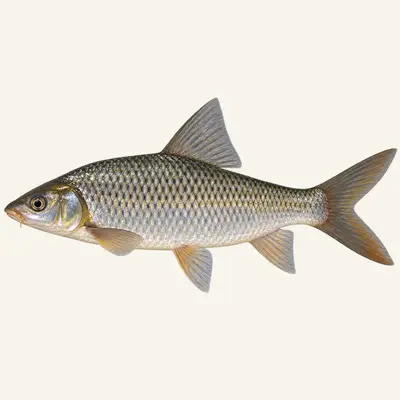
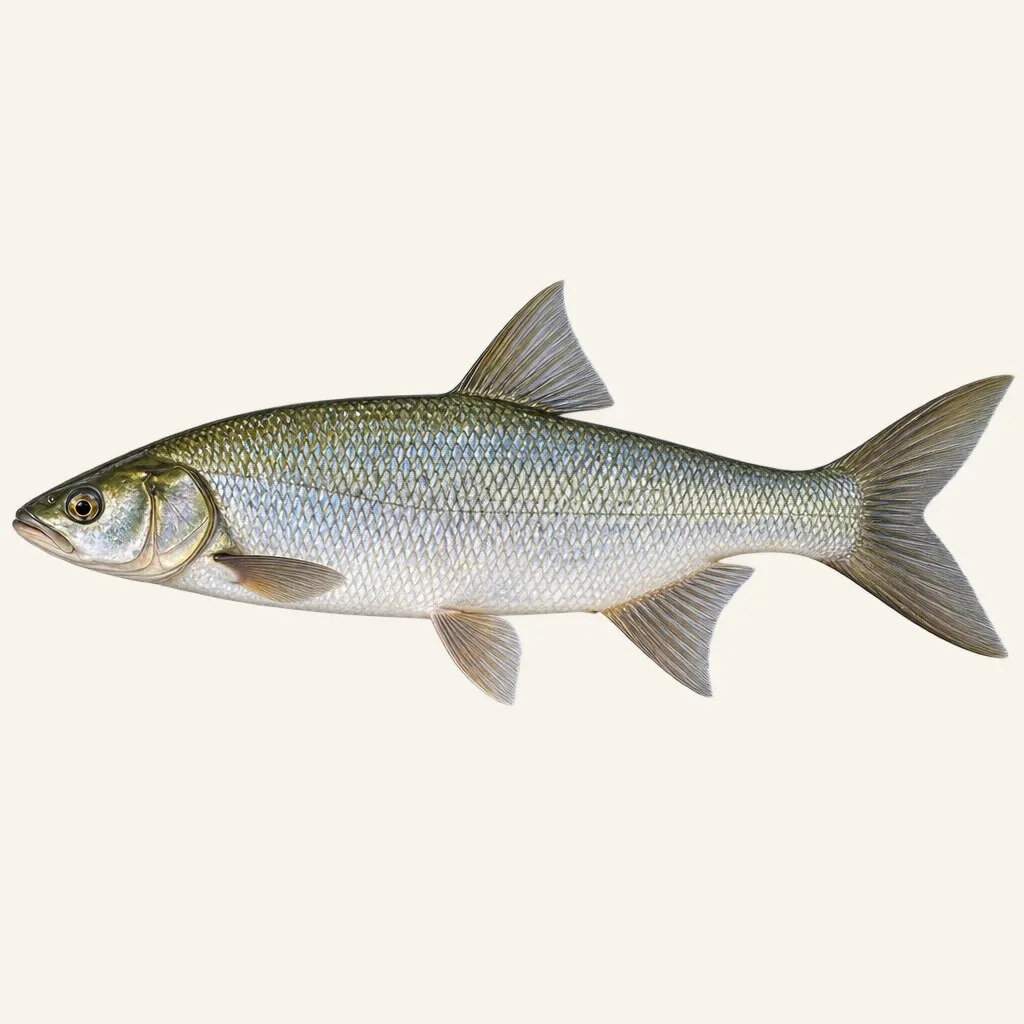
Large cyprinid with an elongated silver body and prominent lower jaw, the asp is an active surface predator hunting fry in open water.
Calendar
Its range
The species holds the large rivers draining to the North Sea (Weser, Elbe), to the Baltic, the Black Sea, the Sea of Azov and the Caspian, plus the Aegean basin from the Maritza to Lake Volvi. In Turkey it reaches no further east than Ankara.
It is absent from the Black Sea basin south of the Danube and from the Rioni in Georgia. It has been introduced into the Rhine, the Northern Dvina and Lake Balkhash.
The Rhine population is recent and stocked, which is worth knowing: an angler in that catchment is fishing for a species that was not there a few decades ago.
Identifying it
Run a finger along the belly. A sharp scaled keel runs between the pelvic-fin origin and the anal-fin origin, and no other European cyprinid has one. That single check settles the identification.
The anal fin is long, with 12 to 14½ branched rays. The lateral line carries 64 to 76 scales — a high count — and the maxilla reaches back past the front margin of the eye.
The body is long and laterally compressed, drawn out into a long, pointed head. The back is green with silver or blue tints, the flanks paler, the belly silvery white; pectoral, pelvic and anal fins run grey to brown.
Nothing about that outline says cyprinid. It is the shape of a fish that runs its prey down.
Breeding
Sexual maturity comes late for a cyprinid, at four or five years. Spawning runs from April to June, after a run up into tributaries, over gravel or submerged weed in fast water, and the eggs stick to whatever they land on.
Each spawning lasts about a fortnight, and a fish spawns across more than one season.
Two conditions appear to have to coincide for the year to succeed: low water and a warm spring. That pairing is uncommon, which is why year classes in an asp population are so uneven — a handful of years carry the recruitment and the rest contribute almost nothing.
The water it needs
This is an open-water fish, in large and medium lowland rivers and in large lakes. Adults hold the lower reaches and the estuaries, down to about 10 m.
Its lies are those of a hunter that works breaks in the flow: bridge piers, tributary mouths, below weirs, deep currents, overgrown stretches and the quiet bays of river bends. Every one of those places either concentrates baitfish or disorients them.
It tolerates 4 to 20°C and the brackish water of estuaries.
Areas
- Large river surfaces
- Fast-current edges
- Downstream dam pools
- Open lake shores
Techniques
- Casting surface lures
- Fly fishing (streamer)
- Sinking minnow-type lures
- Live-bait fishing
Baits
- Minnow lures
- Streamers
- Spinnerbaits
- Live bait (bleak)
What it eats
The asp is one of very few piscivorous cyprinids, and that fact drives everything else about it. Juveniles and adults alike live on fish, particularly bleak and smelt, and small waterbirds are taken on occasion.
The hunt changes with age: juveniles work in packs, adults in small groups or alone.
One point matters for tackle. The asp has no teeth in its mouth — only pharyngeal teeth deep in the throat. It cannot seize and hold the way a pike does, so it stuns and engulfs instead, and that is what makes its attack so violent and so visible at the surface.
How to catch it
You hear it before you plan for it. The asp smashes into a shoal at the surface, usually along a current seam, and that eruption is the most reliable information an angler gets: the job is not to search for the fish but to spot the attack.
The lies are fixed and readable. A bridge pier, a confluence, the water below a weir will hold bleak, and the asp comes back to them. Knowing three such spots on a river beats walking ten kilometres of bank.
In clear water it is extremely wary, as a sight-hunter working in full daylight has to be. Distance casting and a careful approach matter more than the exact choice of lure, and the first pass over a feeding fish is the one that counts.
A toothless but hard mouth calls for a firm strike. Common length is 55 cm and the maximum recorded age only 11 years, so the asp grows fast rather than living long.
Conservation
The asp needs two things to breed well: low water with a warm spring, and free access to tributaries to get there. Flow regulation and weirs remove exactly those.
A fish that only breeds successfully in occasional years cannot afford to lose them. That weakness does not show in adult numbers, which stay respectable long after recruitment has stopped.
Where it has been introduced, a piscivore of this size reshapes the fish community it lands in, and the Rhine is the case still unfolding.
Regulations
Check the local regulations in force (legal size limits, closed seasons, bag limits).
For guidance only. Legal sizes, quotas and open seasons vary by location and season: always check the local regulations in force before fishing.
Other names
Asp in English, occasionally rapfen after the German. The genus was long Aspius, and that name still appears throughout older literature and in a good deal of current regulation, so both are worth searching for. The English name has nothing to do with the snake — it comes from the same Germanic root as the German and Slavic names.
Sources: fishbase.se · api.gbif.org