European seabass
Dicentrarchus labrax · Moronidae
- Saltwater
- Coastal
- Medium
- Size
50–103 cm
- Weight
1.3–12 kg
- Lifespan
30 years
- Water temp.
8–24 °C
- Depth
10–100 m
Where to fish
- Estuary
- Beach
- Rocky shore
Habitat icons: Flaticon
Inhabits the littoral zone over various kinds of bottoms in estuaries, lagoons and occasionally rivers. They enter coastal waters and river mouths in summer, but migrate offshore in colder weather and stay in deep water during winter in the northern part of the range
Calendar
Spawning: fish are vulnerable. Check local rules — closed seasons vary by country.
Its range
The range covers the north-east Atlantic from Morocco to Norway, the British Isles included, together with the Mediterranean and the southern Black Sea. Strays turn up in the Baltic, and down the African coast as far as Senegal.
One recent movement is worth recording: the species has been reported from the northern Red Sea, having come through the Suez Canal. Traffic through that canal, in both directions, is slowly rewriting the fauna of two seas.
The range also breathes with the seasons. Bass move into coastal water and river mouths as it warms and pull out into deeper water offshore as it cools — pronounced in the northern part of the range, much less marked in the south. The species holds between 8 and 24 °C, and a northern winter inshore sits below that.
Identifying it
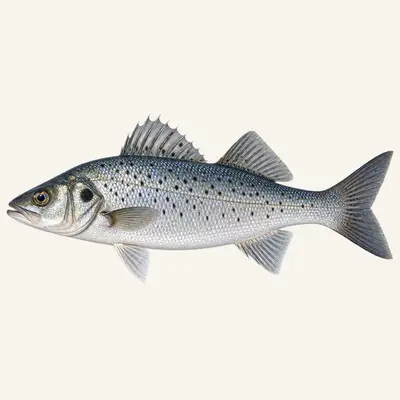
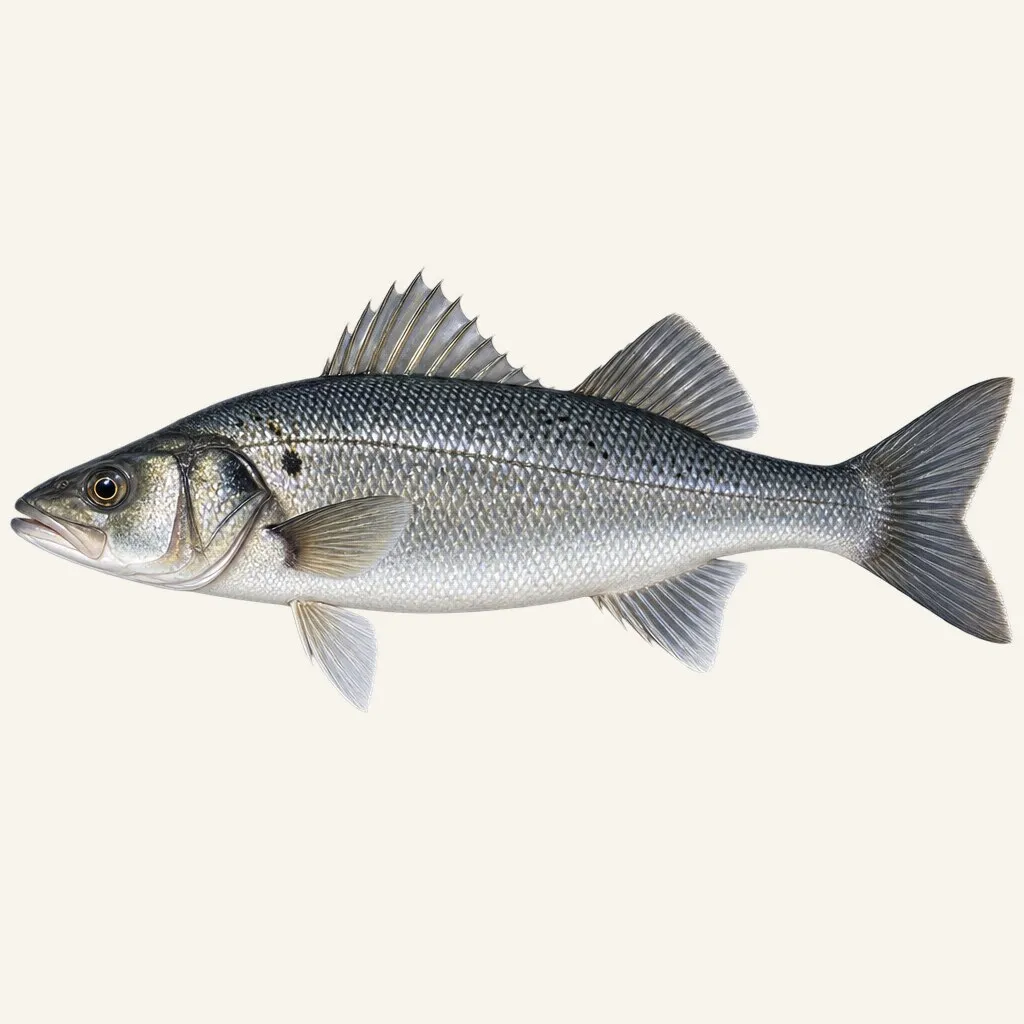
An adult bass carries no markings whatever, and the plainness is itself the character: blue-grey over the back, hard silver along the flanks, white beneath, with no bars, blotches or coloured sheen anywhere. Very few coastal fish of that size are so completely undecorated.
The gill cover holds the detail. Its rear edge is finely serrated, its lower edge carries strong denticles pointing forward, and it bears two flat spines. A bass gripped carelessly about the head opens a hand, and the cut goes deeper than it looks.
There are two dorsal fins, the first with 8 to 10 spines and the second soft with 12 or 13 rays; the anal fin has three spines and 10 to 12 rays. The mouth is moderately protractile, and the vomerine teeth form a crescent at the front of the palate only. Scales on top of the head and between the eyes are cycloid.
Juveniles are the exception to the plainness. They wear dark spots over the upper body which fade as they grow, which is where the confusion with the spotted sea bass starts, that species keeping its spots for life.
Breeding
Bass spawn in groups and the eggs are pelagic — released into open water rather than laid on anything, so there is no nest, no guarding and no substrate requirement of any kind. Each egg is 1.1 to 1.5 mm across and carries one or two oil droplets, which merge into a single drop about twelve hours after laying.
Development is quick at the front and slow afterwards. The embryo takes about three days at 13 to 14 °C; the larva hatches at 3 mm and needs roughly 40 days at 19 °C to finish developing.
The season sits in the cold half of the year over most of the range, which is unusual for a coastal fish at these latitudes, and it happens once annually rather than in repeated bouts. Around the British Isles it falls in spring.
Maturity is the fact that governs everything else about this species. Mediterranean fish first spawn between two and four years old. Atlantic fish take far longer — four to seven years for males, five to eight for females — and the average length at first maturity is about 36 cm, with individuals maturing anywhere between 23 and 46. An Atlantic bass of respectable size may never have spawned at all. Set against a lifespan reaching 30 years, that is an animal built for a long breeding career, provided it lives long enough to begin one.
The water it needs
A bass lives near the bottom over anything at all — sand, rock, mud, mixed ground — from the shoreline out to about 100 m, though it is far more often in shallow water than deep. Estuaries, lagoons, surf beaches, rocky coast, harbours: it uses all of them, and it will run some distance up rivers, being equally at ease in fresh, brackish and salt water.
What it actually follows is moving water rather than any particular ground. Tidal streams accelerating past a headland, the outflow of a lagoon, the seam alongside a breakwater, the broken water where swell works a sandbank — wherever something puts food into motion is where the fish will be.
Age changes its sociability. Young bass go about in schools; adults are markedly less gregarious, and the largest fish are frequently alone. Those are two different fisheries rather than two sizes of one.
Areas
- Estuaries and river mouths
- Surf beaches
- Rocky coastal zones
- Harbours and jetties
Techniques
- Soft lures
- Hard plugs
- Live bait fishing
- Surfcasting
- Jigging
Baits
- Weever fish
- Eel
- Shrimp
- Sand eel
- Cuttlefish
What it eats
The bulk of the diet is shrimps and molluscs, with fish making up the remainder, and the proportion shifts steadily through life. Juveniles live on invertebrates and take progressively more fish as they grow; adults are essentially piscivorous.
That progression has two consequences on the water. A small bass and a large one are interested in genuinely different baits. And a given mark tends to give up fish of consistent size, because what it holds suits one stage and not another.
How to catch it
Bass fishing is organised around water movement rather than around structure. The productive windows are the hours when a tide is actually running — the early part of the flood or the ebb, when current is lifting food off the bottom and the fish are stationed along the edge of it. Slack water can kill a mark stone dead within minutes of it fishing well.
Rough conditions help. A sea working without being unfishable stirs the sand, puts crustaceans into the water and brings fish close in; flat calm under hard sun does the reverse. The hours after a blow are among the best there are, provided the state of the sea still allows the mark to be reached.
The split between schoolies and large solitary fish translates straight into method. A school is found by eye — in the surf, in a bait shoal, under working birds — and fished quickly. A big single fish is worked over a known mark, often at night and often in surprisingly little water, and it is a matter of one or two chances rather than a run of them.
Handling is the last piece and follows from the gill cover. A bass is held by the lower jaw or supported under the belly, never by the gill plates, and those forward-facing denticles will cut an unprotected hand.
Conservation · Near Threatened (IUCN) — This species is in decline. Release your catch quickly and handle it with care — wet hands, as little time out of the water as possible.
Conservation
The biology of this fish leaves very little margin, and three traits combine to remove it. Atlantic bass do not breed until five to eight years old, so a large part of any population has never contributed anything. They spawn once a year rather than in batches spread through a season. And they gather to do it, which concentrates precisely the fish that matter into a predictable place at a predictable time of year.
Any one of those is manageable alone. Together they mean that pressure applied at the wrong moment falls on the breeding stock rather than on the surplus, and that recovery takes the better part of a decade because that is how long it takes a year class to reach maturity in northern water.
That is the background to the management measures introduced along the Atlantic coast over the past decade, and it is also why release counts for more here than it does with an early-maturing fish. A bass put back in good condition can spawn for many seasons afterwards. The rules themselves differ by area and change from year to year; the fisheries authority for the coast being fished is where they come from.
Regulations
Check the local regulations in force (legal size limits, closed seasons, bag limits).
For guidance only. Legal sizes, quotas and open seasons vary by location and season: always check the local regulations in force before fishing.
Other names
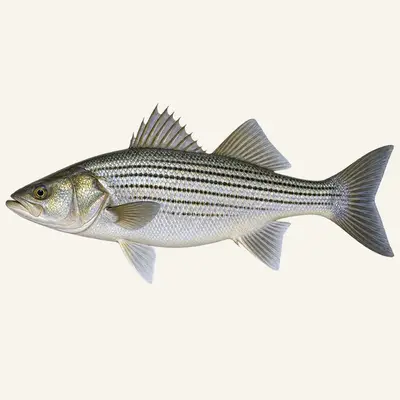
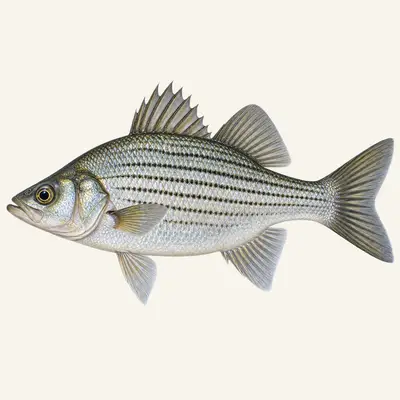
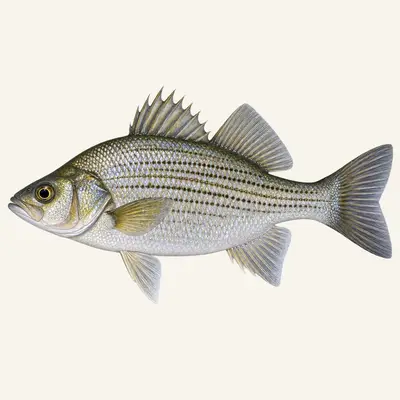
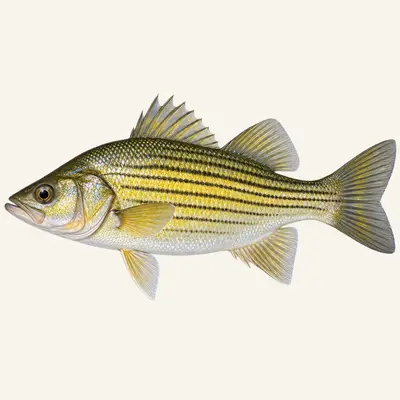
The English name is the problem. In Britain this fish is simply the bass, and in international texts the European sea bass — but bass in North America ordinarily means the largemouth and smallmouth basses, freshwater fish of the sunfish family with no relationship to it at all. The striped bass is a genuine relative, in the temperate bass family alongside this one, which makes matters worse rather than better: some of the fish called bass are cousins and some are not, and the name gives no clue which.
Menus add another layer. Chilean sea bass is a Patagonian toothfish and no sort of bass; black sea bass on an American menu is a different animal again. Branzino and spigola in Italy, lubina in Spain, loup de mer along the French Mediterranean and bar on the French Atlantic coast all mean this fish. The species name, labrax, is what the Greeks called it.
Sources: fishbase.se · api.gbif.org