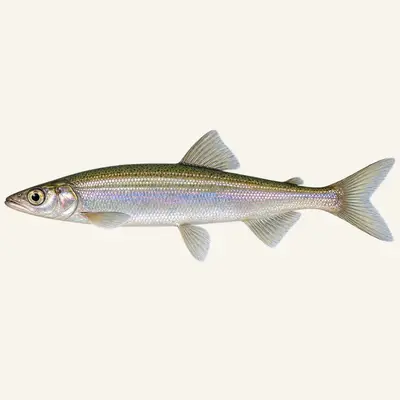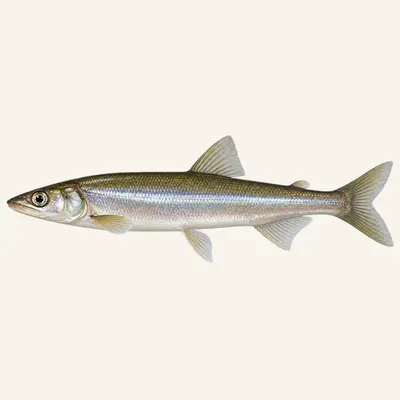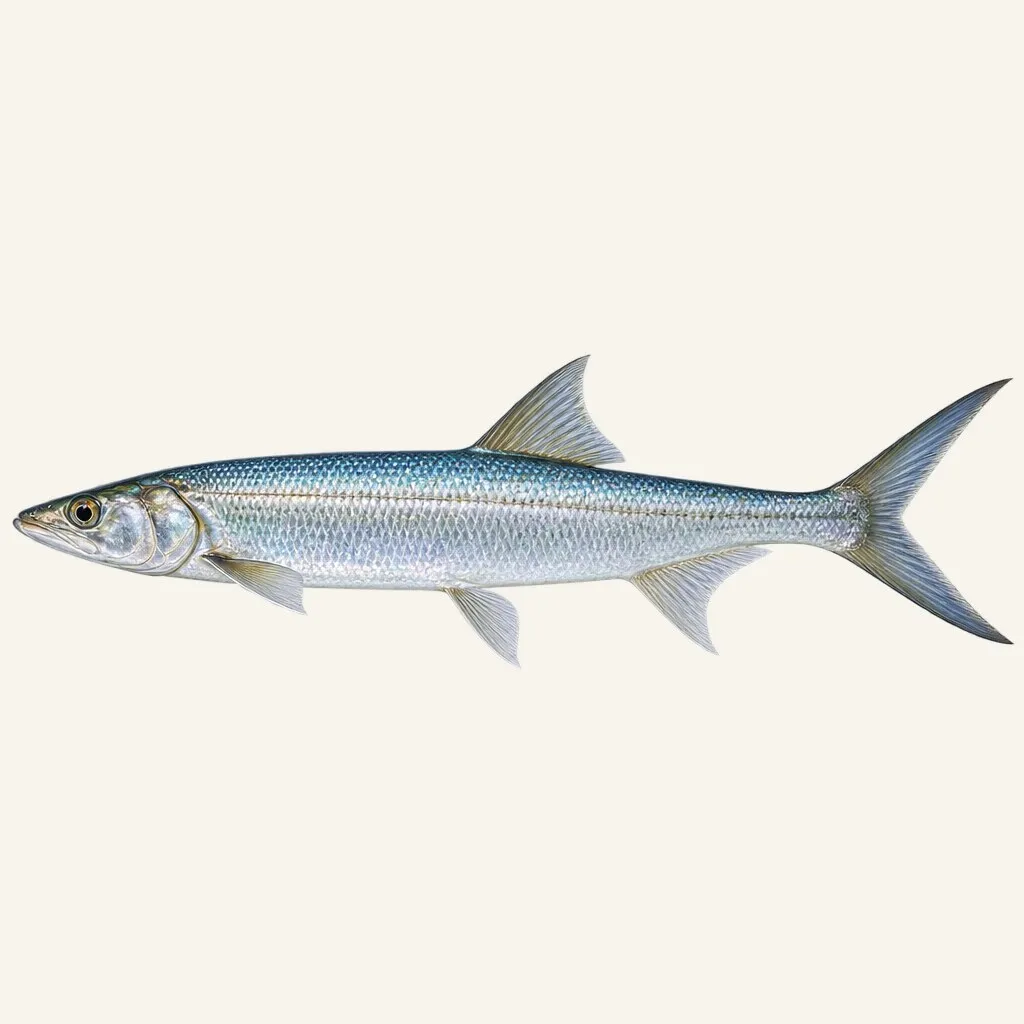
Ladyfish
Elops saurus · Elopidae
- Saltwater
- Migratory
- Medium
- Size
60–100 cm
- Weight
1.1–10 kg
- Water temp.
11–34 °C
- Depth
0–50 m
Where to fish
- Estuary
- Reef
- Beach
Habitat icons: Flaticon
Ladyfish - tropical sea species of the Atlantic.
Calendar
Recorded in 3 countries
Mexico · Puerto Rico · United States
GBIF occurrence records — native and introduced populations combined.
Its range
Cape Cod, Bermuda and the northern Gulf of Mexico down to southern Brazil: one warm-water Atlantic range, with a cold northern limit.
The interesting part of the entry is the records that are not accepted. Occurrences reported from China, Taiwan and Vietnam are flagged as questionable, and the reason is obvious once stated — the Indo-Pacific has its own species of this genus, and a silver, spineless, small-scaled coastal fish is exactly the sort of animal that gets a familiar name pinned on it a long way from home. A literature search on the binomial therefore returns material from the wrong ocean. The geography has to be checked before the fish is.
Identifying it
Count the vertebrae if the fish is open: 73 to 85. Then the branchiostegal rays, 26 to 33. Both figures are extreme, and both belong to the lineage rather than to the species.
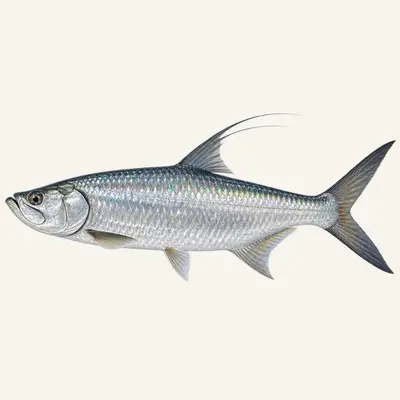
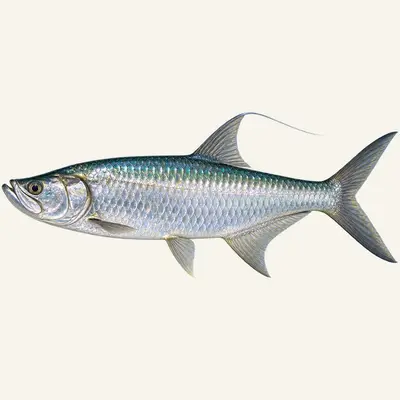
On the outside, the scales are small and there are more than 100 of them along the lateral line. That number is what separates this fish from the other big silver coastal elopomorph it gets mistaken for — the tarpon's own diagnosis gives 40 to 48 lateral-line scales, so the two are not close and the count is decisive at any size. The gular plate under the throat is narrow.
The body is elongate and compressed, silver overall with a bluish upper surface. Dorsal 25 to 29 soft rays, anal 16 to 19, and not a spine anywhere in the fish.
Breeding
The larva gets shorter. Larval development in this species runs through profound changes in body form and two periods of length increase, and between them a period during which the animal loses length. Growth is not the axis it develops along.
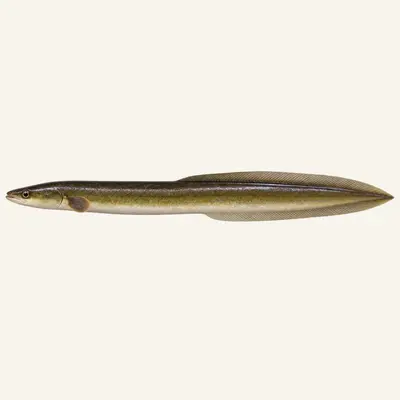
What grows and then shrinks is a leptocephalus: a transparent, leaf-flat larva of the kind that belongs to the eels. The record places these larvae in salinities as low as 0.0 to 0.8 parts per thousand, which is fresh water or near enough to make no difference. Spawning happens in the open sea, the larvae drift shoreward, and they finish up in water with no salt in it.
An oceanic spawner whose larva is an eel-like ribbon that shrinks in fresh water: that combination is the signature of the elopomorphs, and it is far older than anything the adult's shape suggests.
The water it needs
The salinity span runs in both directions from the sea, and it is the whole of this animal's story. Larvae live in what is effectively fresh water. Juveniles are common in lagoons and hypersaline bays — water saltier than the sea. Adults hold shallow neritic ground over muddy bottoms and enter brackish estuaries.
Depth runs from the surface to 50 m and the temperature band from 11 to 34 degrees.
They form large schools close to the shore, which is the practical result of all that tolerance: an animal that can use any coastal water at all does not have to spread out to find water that suits it.
Areas
- Estuaries and river mouths
- Mangroves
- Shallow sandy beaches
- Coastal passes and lagoons
Techniques
- Light lure fishing
- Popper fishing
- Live bait fishing
- Estuary casting
Baits
- Small live fish
- Shrimp
- Silver lures
- Spinning spoons
What it eats
Crustaceans and small fishes, mainly.
A generalist diet is the necessary partner of that salinity range. A fish moving between a hypersaline lagoon and a river-diluted estuary cannot depend on any one prey being present in both, and this one does not.
How to catch it
The fish advertises itself twice over. It is noted for skipping along the surface of the water, which is how a school gets located from a distance, and for jumping after being hooked, which is why anyone fishes for it on purpose. Common length is 60 cm.
Its main recorded use, though, is as bait. The file gives bait as the usual application and rates the flesh second class — sold fresh, salted and frozen, and not sought after. So most of what is caught goes back onto a hook for something larger, and the sport fishery is the minority use of a species that mostly serves as tackle.
One entry belongs to whoever cleans the fish. Rhynchobothrium bulbifer, a tapeworm, is recorded from the viscera of adults. It is a reason to open a fish before deciding it is food, and a reason to leave the guts out of the pan.
Regulations
Check the local regulations in force (legal size limits, closed seasons, bag limits).
For guidance only. Legal sizes, quotas and open seasons vary by location and season: always check the local regulations in force before fishing.
Other names
Ladyfish is the English name; tenpounder is the older one, and it is applied across the genus rather than to this species in particular. What the lady refers to is recorded nowhere, and German simply translated the puzzle rather than solving it: Atlantischer Frauenfisch.
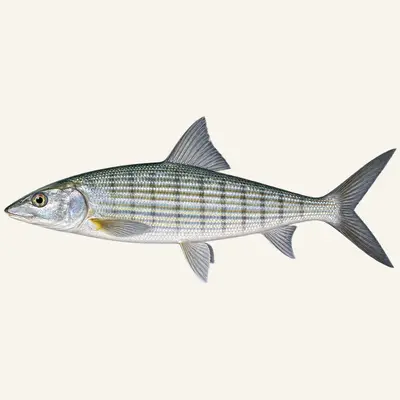
The collision that matters is with the bonefish, not with the tarpon. In Brazilian Portuguese both fish are ubarana, one word covering two families with nothing in it to say which. In Spanish the bonefish is macabí and this one macabí chiro, so the distinction survives — but only as a qualifier, and a market label that drops it has said something false without adding a word.
Sources: fishbase.se · api.gbif.org