Atlantic horse mackerel
Trachurus trachurus · Carangidae
- Saltwater
- Big pelagics
- Easy
- Size
22–70 cm
- Weight
0.1–2.0 kg
- Depth
0–1,050 m
Where to fish
- Estuary
- Rocky shore
Habitat icons: Flaticon
A schooling pelagic fish with a lateral line armoured by bony scutes, forming large coastal shoals.
Calendar
Its range
The eastern Atlantic occupation runs from Norway to the Cape of Good Hope, continues into the south-western Indian Ocean as far as southern Mozambique, and fills the Baltic, the North Sea, the Mediterranean and the Black Sea.
Inside that range the species is not one population. Two stocks are recognised, and they differ in where and when they breed. The western stock spawns in early spring, in a belt running from the Bay of Biscay up to Ireland, then travels north and east towards southern Norway and the northern North Sea. The North Sea stock spawns in the southern North Sea in summer, then moves into the central North Sea, the Skagerrak and the Kattegat.
Those are not administrative lines drawn on a chart. Two spawning grounds, two seasons, two migration routes: a measure that suits one has no particular reason to suit the other, and a fish taken off Norway may have been spawned in either belt.
The species is oceanodromous, which is exactly what those two circuits describe — long seasonal movements made entirely at sea, with no freshwater leg anywhere in the cycle.
Identifying it
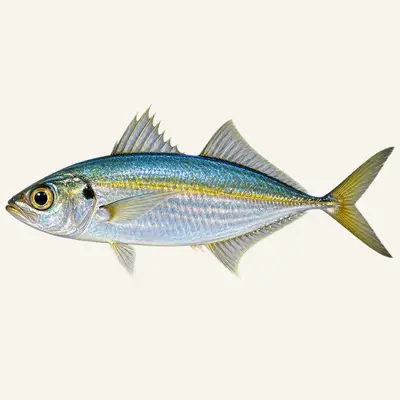
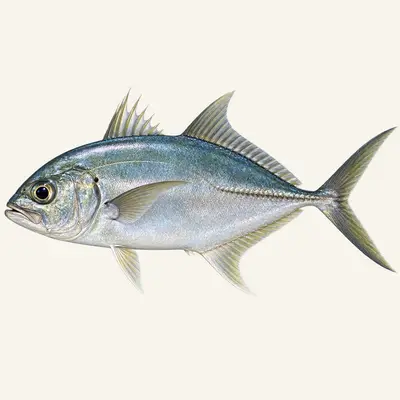
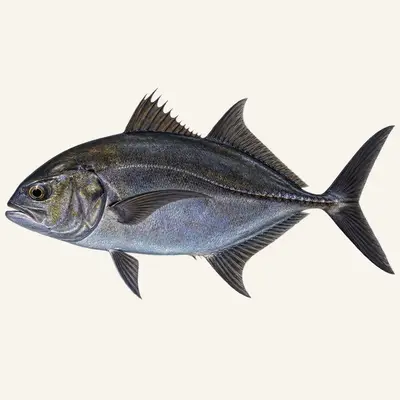
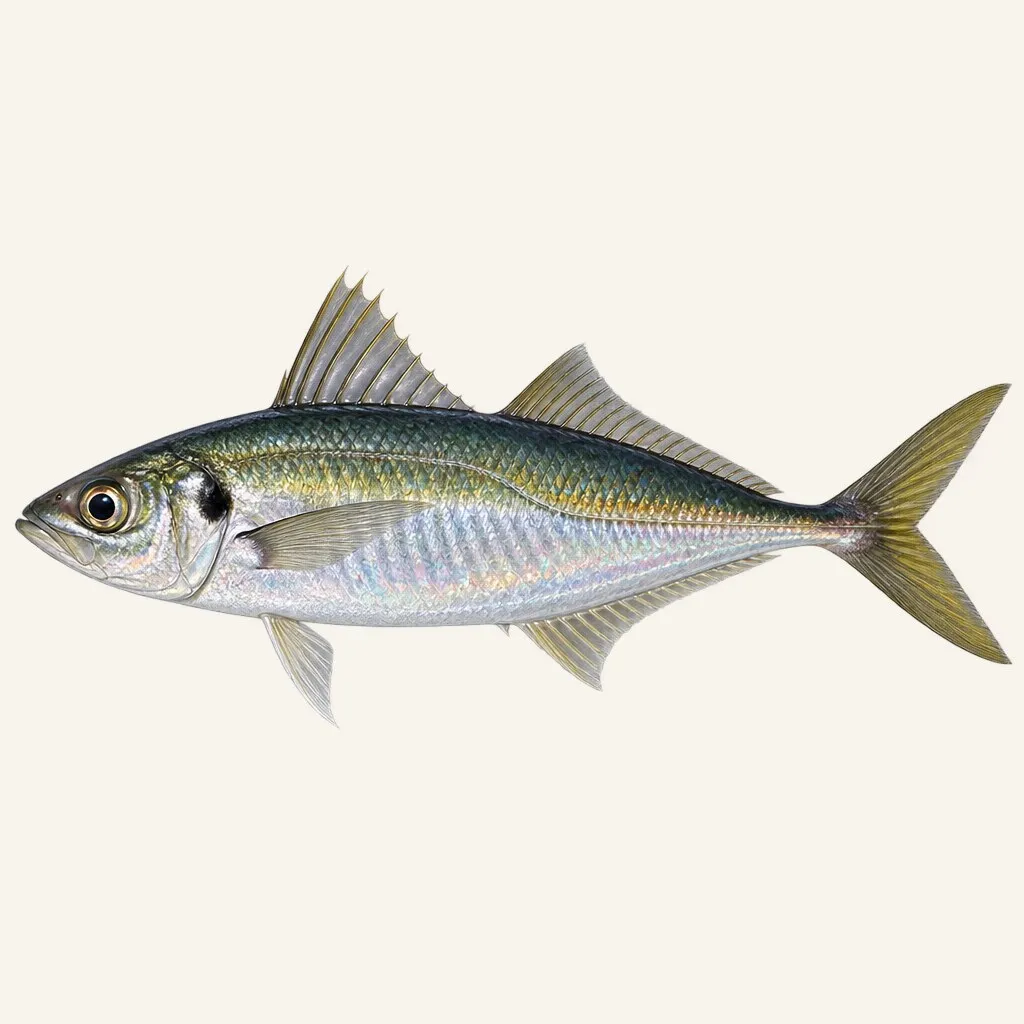
Run a thumb from the gill cover to the tail and the fish identifies itself. The lateral scales are tall and keeled the whole way along, a continuous file of bony plates following the line from head to peduncle rather than gathering at the tail end of it. That armoured line is the character of the genus, and it is read by touch faster than by eye.
The first dorsal fin stands tall, high enough to be obvious on a fish lying flat in a box, which is where the great majority of them are looked at.
A distinct black spot marks the gill cover. The back is bluish green, grey or nearly black, the belly silvery white. Nine dorsal spines, 30 to 36 soft rays, three anal spines, 24 to 32 rays.
Breeding
Spawning is done in batches rather than in a single release. A female sheds about 140,000 eggs over the course of it. The eggs are pelagic and the larvae hatch at 5 mm.
First maturity averages 22.9 cm, within a range of 21 to 30. Set that beside a common length of 22 cm and the arithmetic is uncomfortable: the ordinary fish landed is at, or just short of, its first spawning.
The water it needs
Adults form large schools in coastal areas over sandy substrate. The depth they are usually taken at, 100 to 200 m, sits a long way inside a recorded range that reaches 1,050.
Sand is the operative word. It is the bottom that produces the small fish and crustaceans these schools live on, and it accounts for the species concentrating over the open shelf instead of holding against rock.
Areas
- Piers and harbour breakwaters
- Over coastal shoals
- Current lines and drop-offs
- Estuaries and bays
Techniques
- Sabiki rig (feather string)
- Metal jig fishing
- Baited float fishing
- Drift fishing from a boat
Baits
- Feather and sabiki rigs
- Small metal lures
- Fish strips
- Marine worms
- Shrimp pieces
What it eats
Fish, crustaceans and cephalopods.
Three prey groups, all of them taken in open water, none of them attached to hard ground. This is a school hunting other schools. The fish does not hold a station and wait for something to pass; it travels, and it works whatever concentration it runs into.
How to catch it
The target is the school, and a school near the surface gives itself away the ordinary way — birds working above it, broken water, a slick on the surface.
Density is what the gear exploits. Trains of small hooks or feathers on one line take several fish to a drop, and that method exists because the fish arrives in quantity rather than singly; a single bait offered to a shoal of this kind is mostly wasted. A metal jig and a baited float apply the same principle at a smaller scale, and drifting a boat across a located shoal is what keeps the line inside it.
The keeled scales cut. A horse mackerel slides badly in a bare hand and the lateral line will open a finger, so the fish is taken across the back rather than gripped along the flank.
Common length is 22 cm. This is a bulk fishery on a small fish, rated highly commercial, and the catch goes fresh, smoked, canned and frozen; it fries, grills and bakes.
Conservation · Vulnerable (IUCN) — This species is threatened with extinction. Always release it (no-kill), handle it with the utmost care and check local rules — fishing for it may be prohibited.
Conservation
The two stocks are the whole of the management problem. Each has its own spawning belt and its own circuit, so each is assessed and regulated on its own account, and a good year on one side of the range says nothing at all about the other.
The size structure is the second problem, and it is arithmetic rather than opinion. Maturity averages 22.9 cm; the common length landed is 22. A bulk fishery works the most abundant size class, and here that class is the one that has only just bred, or has not bred yet. Batch spawning spreads a female's output across a whole season, which helps — but only for a female that survives to the season.
Regulations
Unprotected species but subject to minimum sizes and quotas varying by country; check local regulations.
For guidance only. Legal sizes, quotas and open seasons vary by location and season: always check the local regulations in force before fishing.
Other names
Atlantic horse mackerel in English, and scad in the trade. The first half of the name is a problem: this is a carangid, a relative of the jacks and the pompanos, with no connection to the mackerels at all. The same borrowing runs through the other languages — French maquereau bâtard beside chinchard, German Stöcker, Italian sugarello, Spanish jurel — and in North America "horse mackerel" has been applied to bluefin tuna as well, so the phrase on its own locates nothing.
Trachurus is the rough tail, and it records the keeled scales. The epithet repeats the genus, which is what happens when a species is the one the genus was built on.
Sources: fishbase.se · api.gbif.org