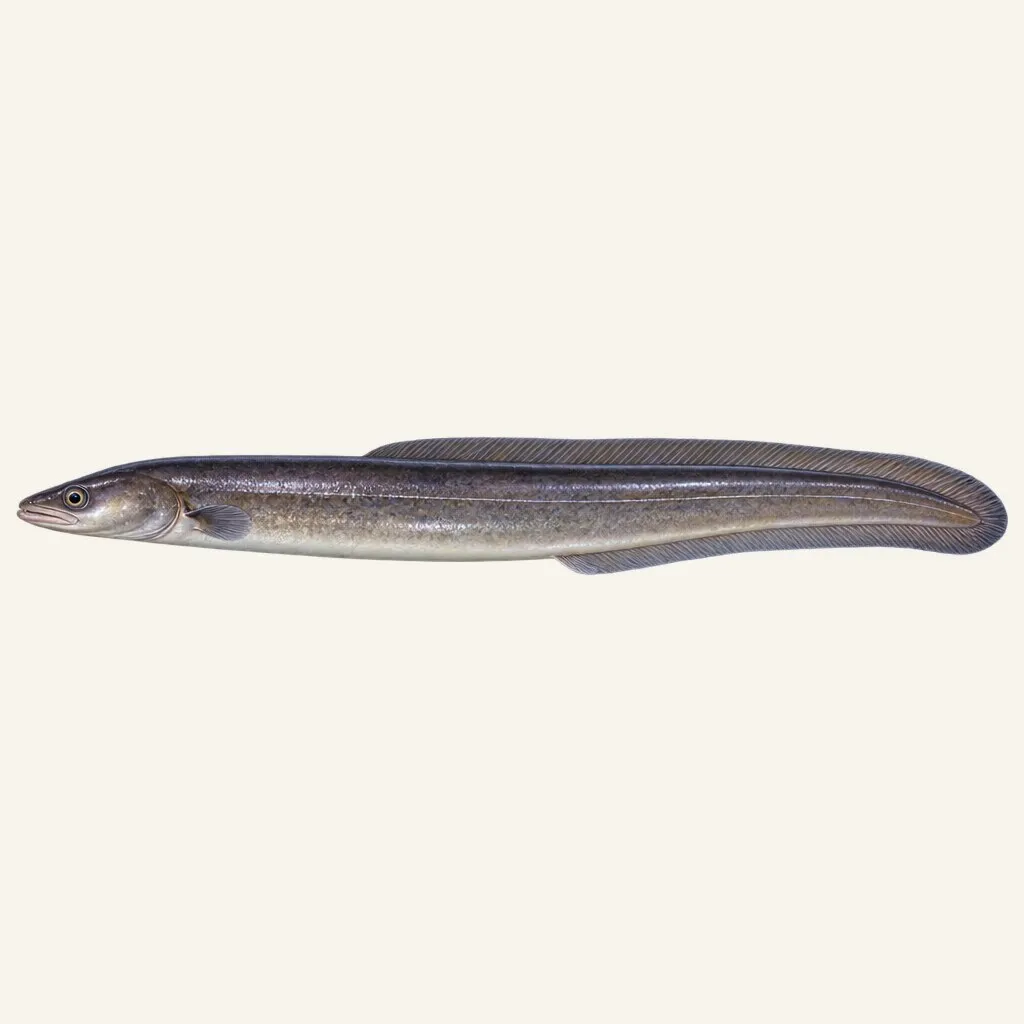
European conger
Conger conger · Congridae
- Saltwater
- Predators
- Hard
- Size
100–300 cm
- Weight
1.5–110 kg
- Depth
0–1,171 m
Where to fish
- Reef
- Rocky shore
Habitat icons: Flaticon
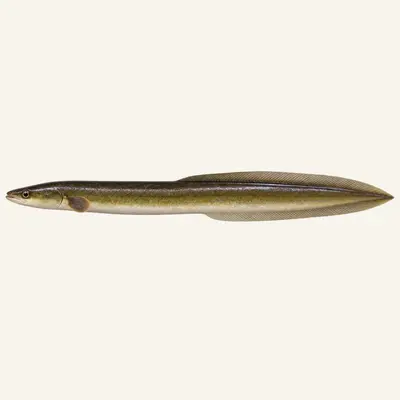
Large scaleless eel-shaped marine fish with a powerful body, living hidden among rocky crevices and shipwrecks.
Calendar
Its range
The species holds the eastern Atlantic from Norway and Iceland south to Senegal, plus the Mediterranean and the Black Sea.
That is the feeding range. The spawning ground is an abyss offshore, at depths nothing on a coastal chart would suggest.
Breeding
A conger breeds once and dies. That single fact governs everything else about the animal, and in a fish that grows to the size this one does, it is not a small thing.
Maturity arrives late and across an extraordinarily wide window: anywhere between 5 and 15 years, at a mean length of about 2 m. Spawning happens in summer, in the Atlantic off Portugal and in the Mediterranean.
The eggs go into open water between 2,000 and 3,000 m down, and a female produces three to eight million of them. That number answers a constraint — when you only get one attempt, everything rides on it.
The water it needs
Congers hold rocky and sandy bottoms from the surface down to 500 m, and to over 1,170 m in the eastern Ionian Sea.
Position shifts with age: young fish stay inshore, adults move out and down. Big fish are therefore not found where the small ones are.
What a conger wants is a hole. A crack in the reef, a rock armour block, a wreck's plating, a harbour wall: it takes a cavity, holds it, and leaves only to hunt.
Areas
- Wrecks and reefs
- Harbours and rocky breakwaters
- Coastal drop-offs
- Atlantic coasts and Mediterranean
Techniques
- Bottom legering
- Boat wreck fishing
- Heavy shore casting
- Night fishing
Baits
- Fresh mackerel
- Cuttlefish or squid
- Sardine
- Fish strips
- Whole pouting
What it eats
It is a nocturnal predator of fish, crustaceans and cephalopods.
Night working and a broad diet make it the opportunist its reputation says it is: it takes whatever comes within reach of the hole, alive or dead, and a powerful bite opens prey that few fish sharing the ground can handle.
How to catch it
Night, and a hole. Those two words carry the whole method: fish on the bottom, directly over or a short cast from rock, after dark, on a bait that smells.
The fight is decided in the first few seconds. A hooked conger goes straight back into its crack and braces there, and once it is in, it does not come out — the terminal tackle stays with it. It has to be turned away from the hole immediately, which means heavier gear and a tighter drag than instinct suggests, the reverse of what you would do with a fish that runs for open water.
Handling is the real safety issue. A good conger is a powerful animal that knots itself, rolls, and bites with jaws that will open a hand. It is not controlled bare-handed, and a fish going back should be unhooked with a tool.
The skin carries heavy slime, so nothing gets a grip. A wet cloth laid on without force holds better than a clenched fist.
Conservation
A fish that breeds once, after 5 to 15 years of growth and a journey out into deep water, has no margin at all. Every adult taken before it spawns is a spawning that will not happen, with nothing to make it up the following year.
Large inshore fish are also extremely localised. A conger occupies one specific crack and stays there, so stripping a wreck or a breakwater of its big fish is not made good by an influx from next door, at least not soon.
Regulations
Subject to local regulations; a minimum landing size applies in several countries.
For guidance only. Legal sizes, quotas and open seasons vary by location and season: always check the local regulations in force before fishing.
Other names
European conger in English, sometimes just conger, and conger eel in general use. That last name causes real trouble: the conger shares the eel order and the breed-once-then-die life history, but it is not an Anguilla, it runs up no river, and its glass-eel stage has nothing to do with the elver fishery. Congre in French, grongo in Italian.
Sources: fishbase.se · api.gbif.org