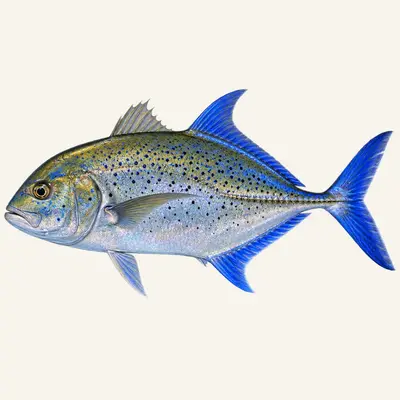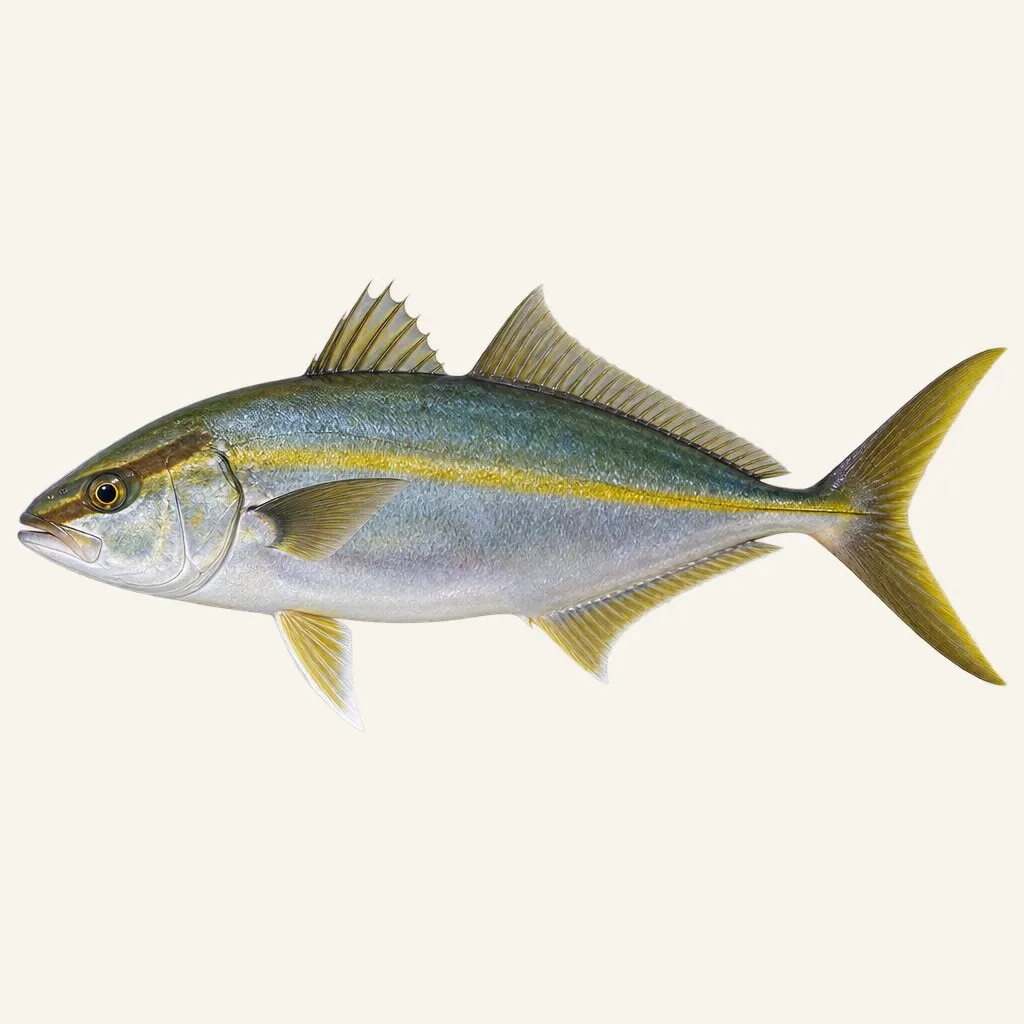
Almaco jack
Seriola rivoliana · Carangidae
- Saltwater
- Coastal
- Medium
- Size
90–160 cm
- Weight
9.3–60 kg
- Depth
5–245 m
Where to fish
- Rocky shore
- Offshore
Habitat icons: Flaticon
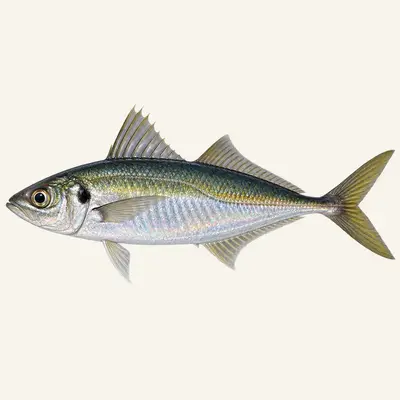
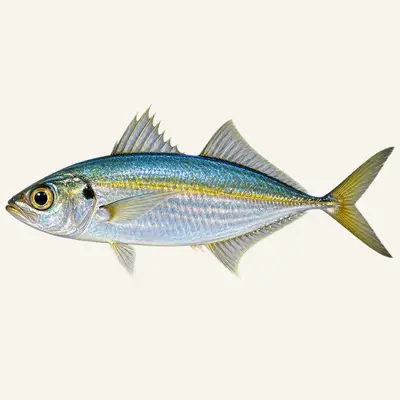
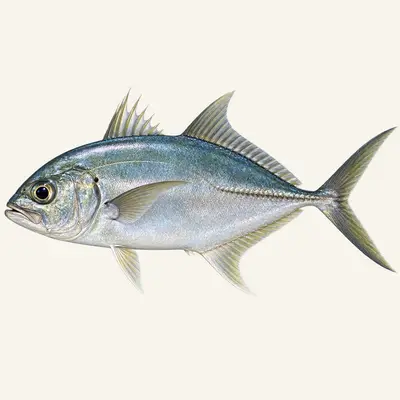
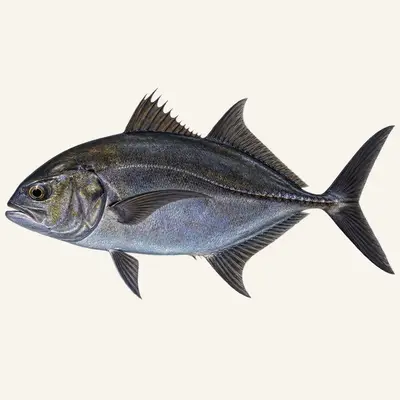
The longfin yellowtail is a slender pelagic carangid, slightly smaller than the greater amberjack, with a laterally compressed body, blue-violet back, and silver flanks. It inhabits warm pelagic waters of tropical and subtropical oceans, often around wrecks and seamounts.
Calendar
Recorded in 29 countries
Australia · Bahamas · Bermuda · Brazil · British Indian Ocean Territory · Cape Verde · Colombia · Costa Rica · Côte d’Ivoire · Ecuador · French Polynesia · Guinea · Indonesia · Japan · Mauritania · Mayotte · Mexico · Panama · Philippines · Portugal · Puerto Rico · Seychelles · Sierra Leone · South Africa · Spain · Taiwan · U.S. Virgin Islands · United Kingdom · United States
GBIF occurrence records — native and introduced populations combined.
Its range
The species is circumglobal. In the Indo-West Pacific it runs from Kenya south to South Africa and east to the Mariana and Wake Islands, north to the Ryukyus and south to New Caledonia and the Kermadecs. In the eastern Pacific, from the United States to Peru, the Galápagos included. In the western Atlantic, from Cape Cod to northern Argentina.
Two precise absences inside an otherwise worldwide range are worth knowing: the Red Sea and French Polynesia. The Seychelles are considered likely.
The eastern Atlantic remains poorly established, and there is a recent record from the island of Lampedusa, in the Mediterranean.
Identifying it
The lobe of the dorsal fin stands well clear of the pectoral: 1.3 to 1.6 times its length, and 18 to 22 per cent of the fork length of the fish. That proportion is what separates this jack from the greater amberjack, whose anterior lobe stays low.
The rear of the upper jaw is very broad and reaches back to the level of the middle of the pupil.
One character deserves attention because it changes with age. The number of gill rakers falls slightly through growth: fish of 2 to 7 cm fork length carry 24 to 29, while beyond 20 cm the count is 22 to 26. A key built on gill rakers therefore returns a different answer depending on the size of the fish in hand, and the same is true of the first anal pterygiophore, which only straightens beyond about 10 cm.
The caudal peduncle carries a groove above and another below.
Colour runs brown or silvery blue-green to olivaceous on the back, paler or silvery beneath with brassy and lavender reflections, usually with a yellow stripe along the midside. An oblique dark yellowish-brown band runs from the nape through the eye to the edge of the upper lip; this nuchal bar often persists in adults, though it can be absent altogether. Juveniles between 2 and 18 cm carry the bar plus six dark body bars, each with a narrow irregular pale streak up its centre, and a seventh at the end of the caudal peduncle — and the bars stop short of the membranes of the second dorsal and anal fins.
The body is short and deep, compressed in cross-section: a heavier outline than the fusiform amberjacks. Eight spines then 27 to 33 soft rays make up the dorsal, three spines and 18 to 22 rays the anal, and there are 24 vertebrae. Common length is about 90 cm to the fork.
The water it needs
Adults are benthopelagic on outer reef slopes and offshore banks, down to 160 m and beyond, in small groups.
The recorded depth range runs from 5 to 245 m, but the working figure is 30 to 35 — a narrow enough band to organise a day around.
Young fish are often seen around floating objects, a habit shared across the genus.
The species is uncommon on East Indian reefs, yet it turns up occasionally in the cool upwelling areas of the Lesser Sunda Islands in Indonesia. A preference for rising cold water inside a tropical setting is a useful prospecting clue.
Areas
- Open pelagic water
- Around submerged structures
- Coastal drop-offs
- Surface currents
Techniques
- Fast vertical jigging
- Drift live bait fishing
- Deep coastal trolling
- Soft lure fishing
Baits
- Long slim jigs
- Live bait (anchovy, mackerel)
- Soft plastic lures
- Squid
What it eats
It feeds mainly on fish, and on invertebrates second.
The dominance of fish makes sense given where the animal holds. Outer slopes and offshore banks are where forage circulates in open water; the invertebrate bottoms belong to the predators of the inner reef.
How to catch it
Thirty to 35 m on an outer reef slope or an offshore bank: the band is narrow enough to build a trip around, and it is the single most useful number on this page.
The species lives in small groups, so one capture points to others in the same place without there being a school to intercept.
In tropical areas, hunting for rising cold water rather than for warm reef is the reflex that distinguishes it from its congeners.
The record attaches a qualifier to this fish that is worth reading closely: ciguatera has been reported from it, particularly in coral reef areas. That is a statement about ground rather than about the species, and the ground it names happens to be where this jack lives — an outer reef slope in the tropics is exactly the setting described. Where the same fish comes off an offshore bank in an upwelling zone the question is a different one, and only somebody who fishes the area can answer it either way.
Regulations
Check the local regulations in force (legal size limits, closed seasons, bag limits).
For guidance only. Legal sizes, quotas and open seasons vary by location and season: always check the local regulations in force before fishing.
Other names
Almaco jack in English, with longfin yellowtail as the descriptive alternative — and the descriptive name is the better of the two, since the long dorsal lobe is precisely the character that identifies the fish. Kahala in Hawaii, where it is reared in open-ocean cages.
As with all the amberjacks, trade names overlap from one country to the next and cannot decide between species.
Sources: fishbase.se · api.gbif.org