Sturgeon
Rows of bony plates, an underslung mouth, four barbels: sturgeon have crossed millions of years almost unchanged. They are also the most threatened fish in the catalog.
9 species documented
A sturgeon grubs the bottom for larvae and molluscs, guided by its barbels. It lives slowly, grows slowly and breeds late — some species wait fifteen years before their first spawning. That slowness, which served them for millions of years, became their weakness against intensive fishing and dams.
Most are migratory: they grow at sea or in estuaries and run up rivers to breed. A single dam without a fish pass is enough to cut a population off from its spawning grounds, and that severance, more than fishing itself, is what collapsed European stocks during the twentieth century.
Almost every wild species is now protected under one arrangement or another. Encountering them is a matter of observation rather than capture, and each of the pages below carries the warning the situation calls for.
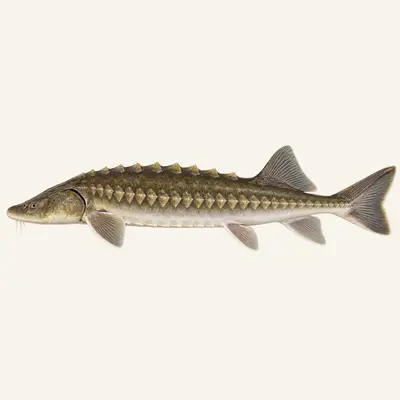
Adriatic sturgeon
Acipenser naccarii
Sturgeons· 200 cm
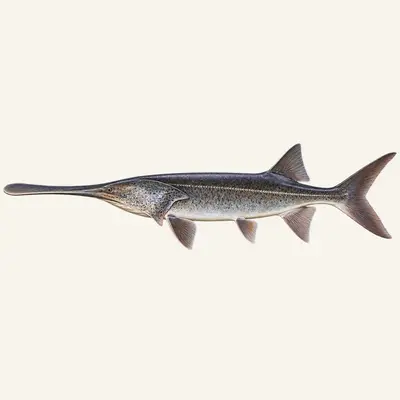
American Paddlefish
Polyodon spathula
Sturgeons· 200 cm
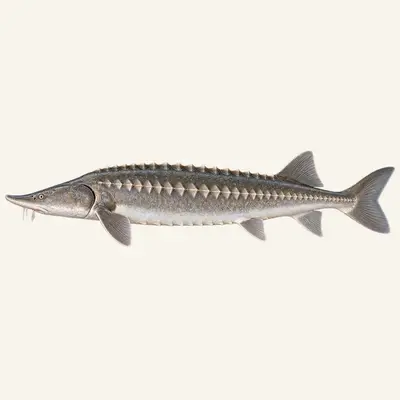
Beluga sturgeon
Huso huso
Sturgeons· 700 cm
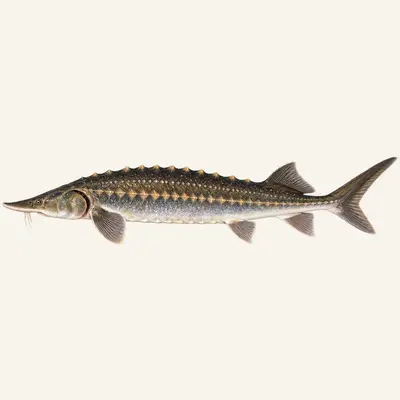
European sturgeon
Acipenser sturio
Sturgeons· 300 cm
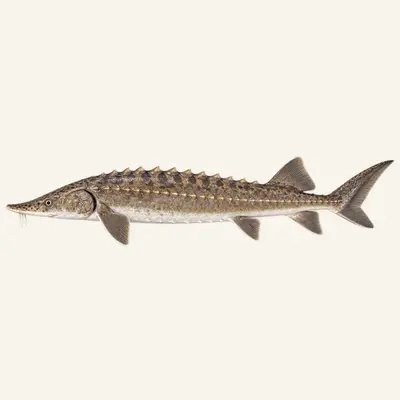
Lake sturgeon
Acipenser fulvescens
Sturgeons· 270 cm
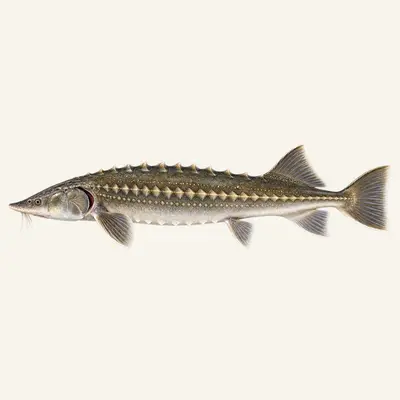
Russian sturgeon
Acipenser gueldenstaedtii
Sturgeons· 236 cm
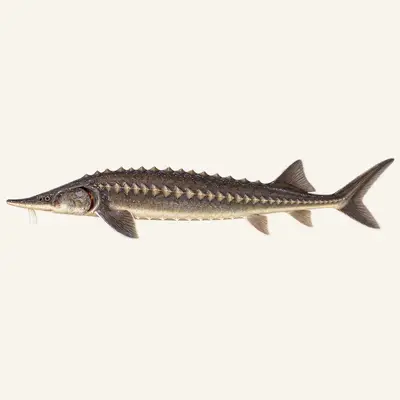
Siberian sturgeon
Acipenser baerii
Sturgeons· 200 cm
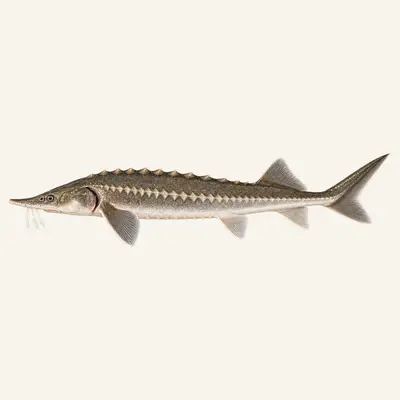
Sterlet
Acipenser ruthenus
Sturgeons· 125 cm
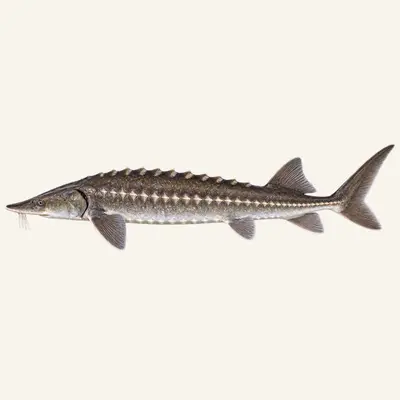
White Sturgeon
Acipenser transmontanus
Sturgeons· 610 cm