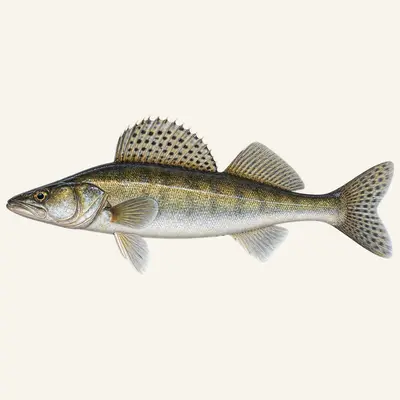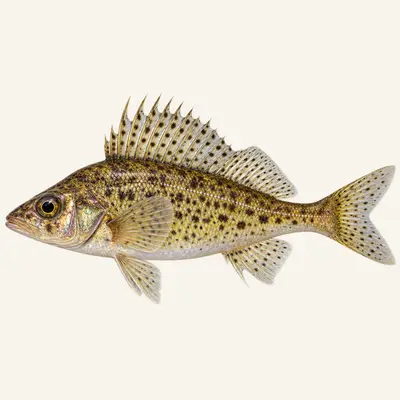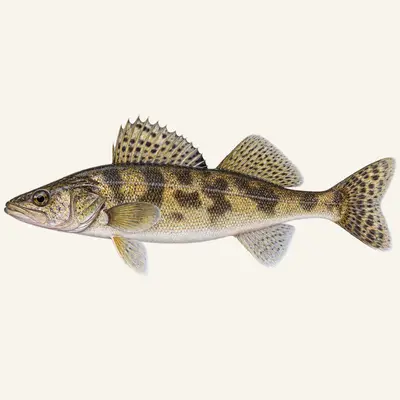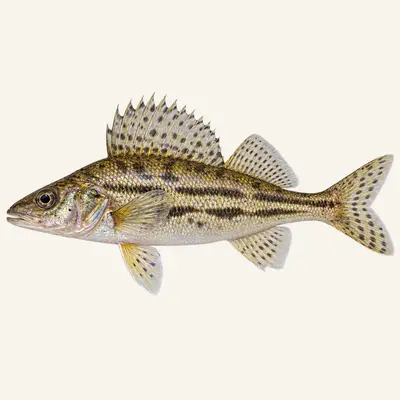
European perch
Perca fluviatilis · Percidae
- Freshwater
- Predators
- Easy
- Size
25–50 cm
- Weight
0.2–4.8 kg
- Lifespan
22 years
- Water temp.
10–22 °C
- Depth
1–30 m
Where to fish
- River
- Lake
- Pond
- Canal
Habitat icons: Flaticon
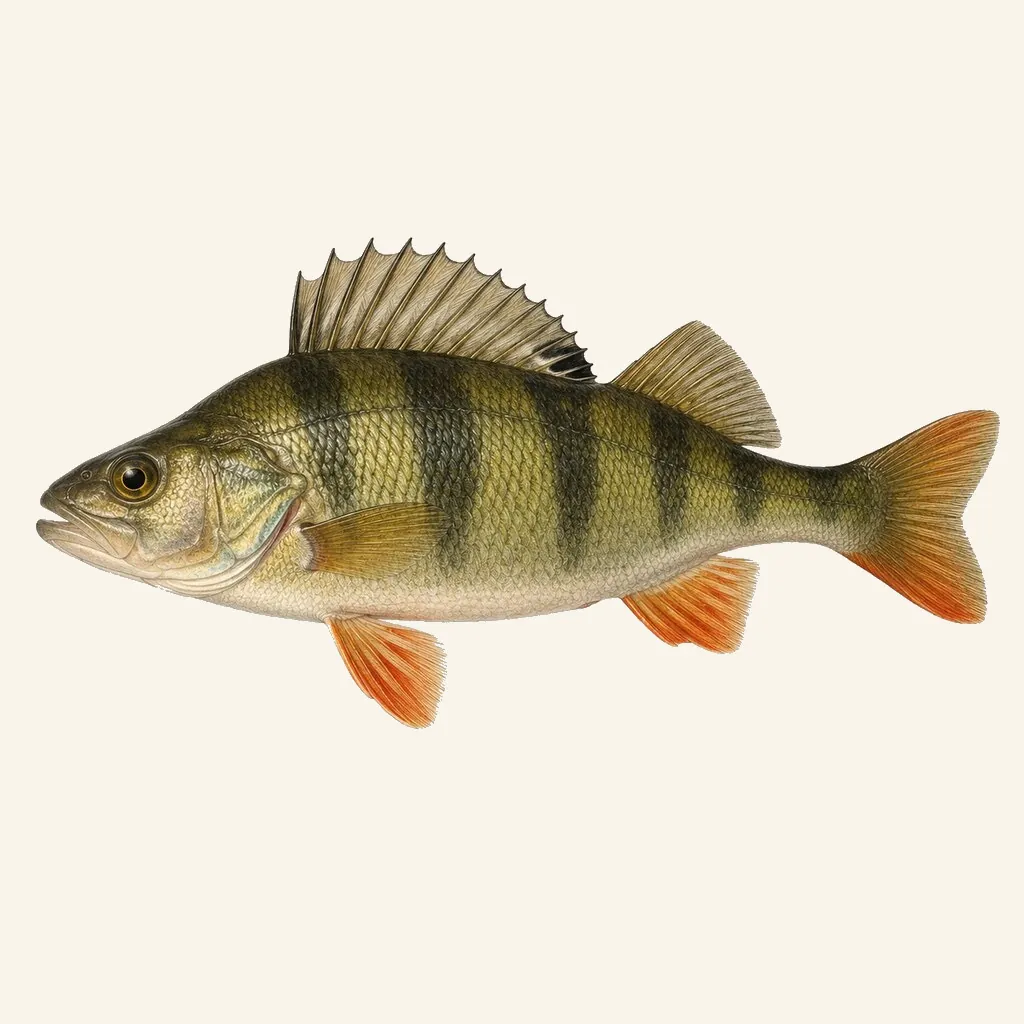
Green-and-orange striped fish with distinctive red fins - A schooling fish much prized by anglers
Calendar
Spawning: fish are vulnerable. Check local rules — closed seasons vary by country.
Recorded in 37 countries
Åland Islands · Australia · Austria · Belarus · Belgium · Bulgaria · Croatia · Czechia · Denmark · Estonia · Finland · France · Germany · Hungary · Ireland · Isle of Man · Italy · Kazakhstan · Latvia · Lithuania · Luxembourg · Moldova · Netherlands · New Zealand · Norway · Poland · Portugal · Romania · Russia · Slovakia · Slovenia · Spain · Sweden · Switzerland · Türkiye · Ukraine · United Kingdom
GBIF occurrence records — native and introduced populations combined.
Its range
This is one of the least particular fish in the catalogue, and its range says so. It covers temperate Eurasia from the top of Scandinavia east to the Kolyma, taking in the Aral basin and reaching the Aegean drainages on its southern edge.
The gaps are the interesting part. The Iberian Peninsula, central Italy and the Adriatic basin have no native population, and those are exactly the southern peninsular drainages that were cut off from the northern river systems long enough to develop their own fish faunas. Where the species is caught there now, somebody put it there.
It has travelled far beyond Eurasia since, and the countries that received it have reported damage to their own fish communities as a result. Tolerance is what makes it such an effective coloniser: a fish that copes with brackish lagoons, deep lakes, canals and modest streams alike will establish itself in almost anything it is tipped into.
Identifying it
Five to eight bold dark bars, most of them forked into a Y towards the belly, laid across a greenish-yellow flank. Add pelvic and anal fins running from yellow to hard red, and a dark blotch on the rear of the first dorsal, and the identification is finished before anyone reaches for a key. That combination belongs to no other percid in Europe.
The two dorsal fins stand well apart, the front one distinctly taller than the one behind it and armed with 14 to 20 spines. The tail is only slightly notched. Between 56 and 77 scales follow the lateral line, and the vertebral count runs 39 to 42. The body is flattened side to side, which produces the short deep outline that reads so differently from the long-bodied percids sharing the same water.
Age changes the profile. Big fish thicken over the shoulder into a pronounced nuchal hump, enough that a heavy one seen at a distance can be mistaken for something else entirely.
Breeding
The eggs come out in a ribbon, and nothing else in European fresh water does that. They sit inside a gelatinous sleeve that can stretch to a metre, which the female drapes over drowned branches, weed and root tangles rather than releasing loose into the water.
The proceedings are noisier than that description suggests. Males reach the spawning ground first and wait. When a ripe female arrives, one or two of them fall in behind her, and the line following her may build to 15 or 25 fish, though only two ever press their snouts against her belly. The group runs curving laps through the branchwork near the surface, and the males fertilise the ribbon as it is laid.
Incubation lasts 8 to 16 days in ordinary conditions. Eggs measure 2 to 2.5 mm and the larvae are 5 mm at hatching, which is small enough that the first weeks are spent on plankton in open water rather than anywhere near the parents.
Spawning falls between February and July depending on how far north the water lies, and starts when it reaches 7 or 8 degrees. Males come to maturity a year or two ahead of the females, at one to three years against two to four. That gap runs through the whole population structure: past a certain size, the fish being caught are overwhelmingly female.
The water it needs
Estuarine lagoons, lakes of any size, canals, medium rivers: very little is ruled out. The working depth runs from 1 to 30 m and settles around 3 or 4, and the preferred temperature band is 10 to 22 degrees.
The fish changes address as it grows. Larvae and small juveniles live in open water on planktonic invertebrates; through the first summer many of them move in against the margins to work the bottom for benthic prey; fish reach roughly 12 cm before turning seriously to eating other fish. Three different habitats in the first two years of life.
Shoaling is the fact with the most practical weight. These fish live in groups, often large and strikingly even in size, and those groups travel. Finding one very rarely means finding one, and a spot that has gone dead usually means the shoal has moved on rather than that it has stopped feeding.
Areas
- Cluttered areas
- pontoons
- weed beds
- drop-offs
- sunken wood
Techniques
- Lure
- Live bait
- Worms
- Earthworm
Baits
- Spoon
- Soft lures
- Crankbait
- Micro-jig
- Drop shot
What it eats
An opportunist that works in daylight, with the heaviest feeding around sunrise and sunset. Whatever is available gets eaten, and the menu turns over completely as the fish grows: plankton, then bottom invertebrates, then fish from about 12 cm onwards.
That last switch decides everything about a population. Where prey fish are plentiful the shift happens on schedule and the fish grow on; where they are missing, the population stalls into large numbers of small individuals that never get past the invertebrate stage. Waters full of stunted stripey fish are not overfished, they are underfed.
The ones that do get through often feed on their own year-classes, which is how a lake with nothing else in it still produces the occasional heavy specimen.
How to catch it
The shoal organises the whole approach. A bite promises more bites from the same square metre, so staying put for a few minutes after a fish is worth more than moving on immediately; conversely, a swim that dies rarely comes back within the session.
Feeding peaks at dawn and dusk, but this is one of the few predators that can be relied on through the middle of the day, and any drop in light helps. Overcast beats glare, and coloured water beats clear.
The mouth is wide but the tissue at its edge is thin and tears, so a fish played hard comes off. A soft rod hand loses fewer than a heavy one. Handling has its own rules: the first dorsal is a row of spines and the gill covers are sharp, so the fish is taken from above with the palm folding the dorsal flat as it closes.
More anglers start on this species than on any other in Europe, for three reasons that have nothing to do with sentiment. It lives almost everywhere, it feeds in daylight, and it takes natural bait and artificial lures with equal willingness.
Conservation
Egg ribbons need something to hang on, and that is where this species is genuinely fragile. A bank stripped of drowned timber, root tangles and marginal weed gives a female nowhere to drape a metre of eggs. Engineering that tidies a margin removes the spawning substrate without touching water quality at all, so the water keeps looking healthy while the fishery stops renewing itself.
The other pressure runs outward rather than inward. Beyond Eurasia this fish fills a role that often had no local occupant, and the fauna already in place pays for it. That is worth weighing before moving stock between waters, a practice that persists wherever the species is admired.
Removal for the table is constant. The flesh is good and carries few bones, the fishery is heavily commercial and the species is farmed besides. Populations absorb all of that comfortably, on the single condition that the cover the eggs need is still standing in spring.
Regulations
Generally no minimum size / No closed season
For guidance only. Legal sizes, quotas and open seasons vary by location and season: always check the local regulations in force before fishing.
Other names
European perch is the full name, and English speakers within its range usually shorten it to perch and leave it there. In Australia and New Zealand, where it was introduced and where it is now regarded as a pest, it goes by redfin or redfin perch, after the fins.
The confusions are worth knowing because they run through the fishing literature. In North America perch normally means the yellow perch, a congener that looks close enough to pass at a glance and is a separate species. Elsewhere the word attaches to fish from entirely unrelated families: white perch is a temperate bass, ocean perch on a fish counter is a redfish, and in Australia golden perch and Macquarie perch belong to a southern-hemisphere family altogether. A regulation or a catch report that says only perch has said very little.
The genus name is simply the classical Greek and Latin word for the fish, which has been in continuous use for the same animal for well over two thousand years.
Sources: fishbase.se · api.gbif.org