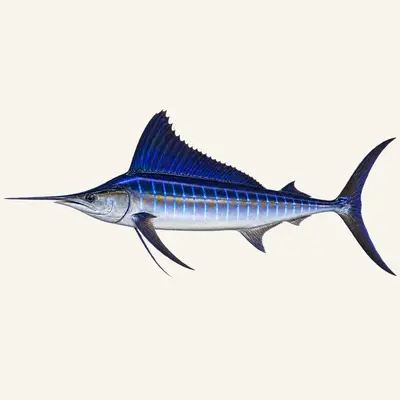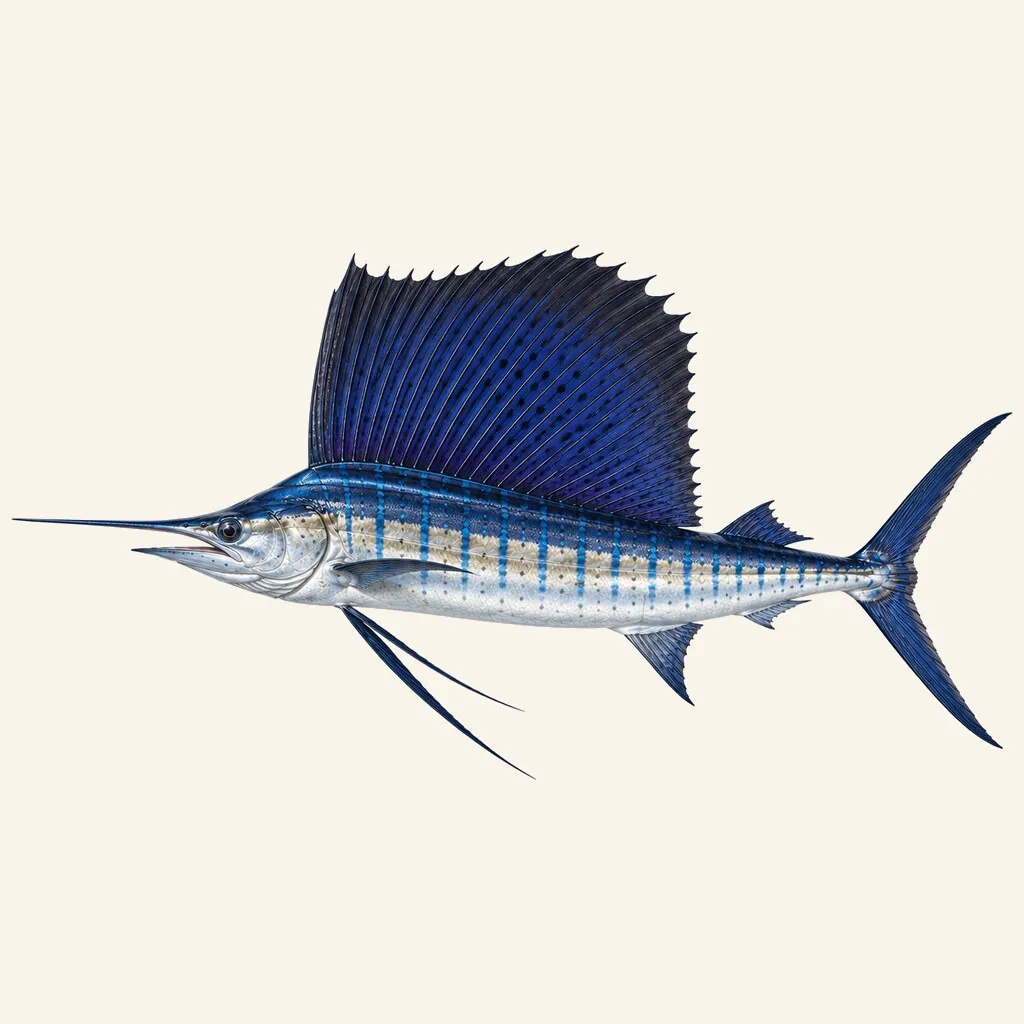
Indo-Pacific sailfish
Istiophorus platypterus · Istiophoridae
- Saltwater
- Coastal
- Medium
- Regulated
- Size
270–348 cm
- Weight
254–100 kg
- Lifespan
13 years
- Depth
0–200 m
Where to fish
- Offshore
Habitat icons: Flaticon
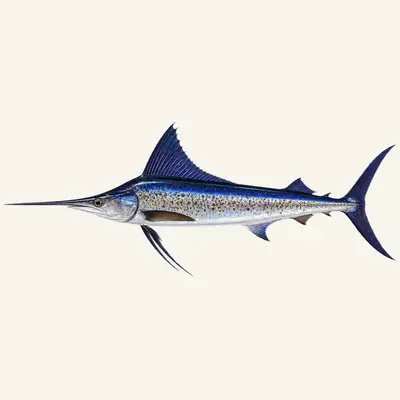
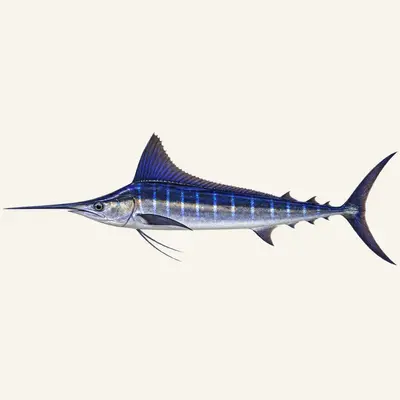
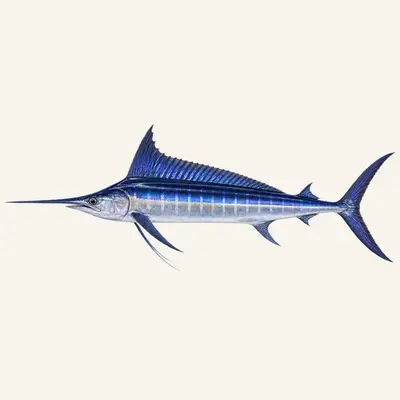
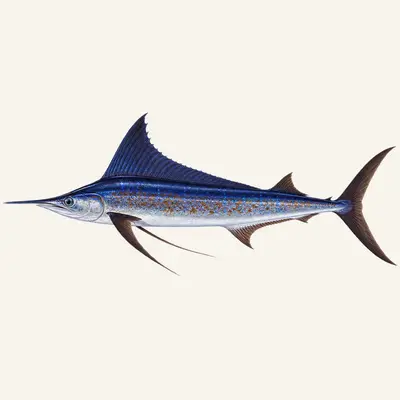
The Indo-Pacific sailfish is famous for its enormous sail-like dorsal fin, taller than its body depth, which it uses to herd fish schools during hunting. Considered one of the fastest fish in the world, it swims in tropical open-ocean waters across a vast Indo-Pacific range.
Calendar
Recorded in 19 countries
Australia · Austria · Costa Rica · Faroe Islands · France · Germany · Guatemala · India · Indonesia · Italy · Mexico · Mozambique · Norway · Portugal · Puerto Rico · Spain · Svalbard & Jan Mayen · United Kingdom · United States
GBIF occurrence records — native and introduced populations combined.
Its range
Tropical and temperate water across the whole Indo-Pacific, from 180 degrees west to 180 degrees east — the range spans every longitude there is. Its northern and southern edges are not symmetrical, reaching 45 to 50 degrees north in the western Pacific against 35 in the east, and 45 degrees south in the western Indian Ocean against 35 in the east. Those margins follow warm currents rather than parallels.
One addition to the range has a date. The fish came through the Suez Canal from the Red Sea and established itself in the Mediterranean, one of the dozens of Indo-Pacific species that have made the same crossing since the canal opened. It is the only part of this distribution that can be attributed to an engineering decision.
Identifying it
Two dorsal fins, and the arithmetic between them is what the published diagnosis leads on. The first carries 42 to 49 rays and stands taller than the body is deep. The second carries six or seven. One fin has been enlarged into a sail and the other abandoned, and it is the height of the first that the description names as the character of the species — not, it should be said, of this species against its Atlantic counterpart, which is built on the same plan.
The animal is designed to put its appendages away. The sail folds down. The pelvic fins are reduced to a spine and two rays fused into a single long, narrow blade, and they retract into a groove cut into the belly. A fish that stows its pelvics inside its own outline is managing drag as deliberately as it manages thrust, and the double keels on either side of the caudal peduncle belong to the same account.
The bill is long, slender and round in section. That is the separation from the swordfish, whose bill is flattened into a blade. Inside the mouth, the jaws and palatines carry villiform teeth — minute, innumerable, gripping nothing. There are no gill rakers at all.
Colour is secondary but consistent: a dark back crossed by about 20 bluish vertical bars, a pale silver belly, a blue-black sail spotted with numerous dark marks, and the remaining fins blackish brown or dark blue. Scales are small, embedded and tipped with one or two blunt points.
A common fish measures around 270 cm, and the oldest on record is 13.
Breeding
In tropical and subtropical Pacific water the species spawns in every month of the year, with the rate peaking in the local summer of each hemisphere.
Pairing takes two observed forms. A male and a female swim in company, or two or three males pursue a single female. Ripe ovarian eggs measure about 0.85 mm, are transparent, carry no structure on the membrane and hold a single globule of oil. Eggs stripped from a captured female in the Indian Ocean averaged 1.304 mm.
That oil globule is what allows an animal of the open sea to reproduce anywhere it happens to be. It holds the egg up in the surface layer, where the heat and the larval food are, with no substrate to find and nothing to attach to. Even so, the species performs spawning migrations in the Pacific, so location is not entirely indifferent to it.
The water it needs
The species holds the warm layer over the thermocline, from the surface to 200 m and usually below the first 30.
That boundary is the floor of its world, and it is worth thinking of it that way. The thickness of the mixed layer decides how much water the fish actually has, and thickness varies between sectors far more than surface temperature does. Two places reading the same on a thermometer can offer very different volumes.
The distribution inside that layer is the counter-intuitive part. The heaviest concentrations are close to coasts and islands, not in the middle of the basins. A headland, a bank, a steep drop-off assembles forage, and the fish is present there at densities that bear no relation to what the open ocean yields. Schools appear to be sorted by size.
Areas
- Tropical coastal waters
- Around FADs (fish aggregating devices)
- Thermal front zones
- Offshore blue waters
Techniques
- Fast surface trolling
- Live bait fishing
- Skipping lures
- Surface dead bait
Baits
- Rigged ballyhoo
- Small tunas
- Natural squid
- Colored surface lures
What it eats
Fishes first, then crustaceans and cephalopods. The villiform teeth and the absent gill rakers describe the method between them: nothing is chewed and nothing is strained, and prey goes down whole.
How to catch it
Two things about the animal decide how it is fished, and they pull in the same direction.
The first is where it concentrates. Coasts, islands and abrupt relief hold the density; the open basin does not. Trolling far offshore for this species works the thin part of its range, and the boats that catch it consistently are working structure.
The second is the layer. The fish lives over the thermocline and usually below the first 30 m, so a spread presented in the top few metres is fishing above most of the population. Where the mixed layer is thick, that gap matters more.
The species is taken mainly on longlines and in set nets, sometimes by trolling and by harpoon from a boat. The harpoon is the informative entry: it means the fish is regularly visible at the surface, and a sail cutting the water is a sighting rather than a guess.
The mouth is the mechanical problem. It is hard, lined with teeth that hold nothing, and a long bill sits in front of it. A hook that has not found the corner of the jaw is a hook that comes back, and the fish spends part of the fight clear of the water where nothing can be recovered.
Regulated — Often governed by quotas, size limits, seasons, or reporting rules.
Conservation · Vulnerable (IUCN) — This species is threatened with extinction. Always release it (no-kill), handle it with the utmost care and check local rules — fishing for it may be prohibited.
Conservation
What presses here is not a slow biology. The species lives 13 years at the outside and spawns year-round in the tropics, which by the standards of large pelagics is quick.
The pressure comes from where the fish gathers. The densest aggregations are coastal and insular — exactly the water in which artisanal fisheries operate, and exactly the water that distant-water fleets also come to work. Two efforts of entirely different character land on the same aggregations, and neither is accounted against the other.
Beneath that sits the layer problem. Longlines set for tuna work the same warm surface band, on a scale counted in millions of hooks, and this species is taken incidentally across the whole of it. Its flesh sells fresh, smoked and frozen and serves for sashimi, so a fish that comes up is never a loss to the vessel. Nothing in the economics discourages the catch.
Regulations
Check the local regulations in force (legal size limits, closed seasons, bag limits).
For guidance only. Legal sizes, quotas and open seasons vary by location and season: always check the local regulations in force before fishing.
Other names
Sailfish, and in careful use Indo-Pacific sailfish, because the qualifier is doing real work. The Atlantic holds a counterpart, and the two are treated here as separate species — the alternative convention recognises a single sailfish worldwide and applies this name to it. An unqualified "sailfish" in a report is therefore ambiguous about both the animal and the author's taxonomy.
The genus says in Greek what the English name says: istion is a sail and phoros means bearing. The epithet platypterus means broad-finned, which is a description of the same structure a third time over.
Sources: fishbase.se · api.gbif.org